Sustained desert heat quickly turns a failing cooling system into a dangerous household emergency, stripping away your indoor comfort and peace of mind.
Sustained desert heat quickly turns a failing cooling system into a dangerous household emergency, stripping away your indoor comfort and peace of mind. Ignoring the subtle indicators of system decline leads to sudden breakdowns when you need cooling the most. Recognizing these early warnings saves you from stressful summer emergencies and helps you plan a timely ac replacement Arizona upgrade. This guide covers the warning signs that indicate your cooling system is failing.
The Most Common Warning Signs You Need AC Replacement in Arizona
Ignoring the subtle indicators of a failing cooling system in a harsh desert climate can lead to sudden, catastrophic failure when you need climate control the most. Understanding these early warning signals is the only way to prevent a complete system breakdown that forces an emergency financial decision.
An emergency replacement scheduled in peak summer — when every HVAC contractor in Mohave County is running at full capacity — costs $500–$1,500 more than the same job booked in fall. That premium exists because contractors charge surge pricing during demand spikes, equipment lead times extend when regional inventory is depleted, and homeowners in a crisis accept less favorable terms. A system that shows clear warning signs three months before summer failure gives you the negotiating position to plan the work and choose the timing.
The alternative is worse. Homeowners who delay past the compressor failure point often face a secondary repair bill on top of the system cost — failed capacitors, damaged contactors, and electrical components that drew excessive amperage during the compressor’s final weeks add $300–$800 to the base replacement cost. The warning signs described in the next section are the difference between a planned upgrade and an unplanned emergency.
For a full breakdown of what the project involves, see our AC replacement guide for Bullhead City homeowners — it covers equipment selection, contractor questions, and what a proper installation looks like.
For a full breakdown of what the project involves, see our AC replacement guide for Bullhead City homeowners — it covers equipment selection, contractor questions, and what a proper installation looks like.
When to Call Horizon Air Vs. Handle It Yourself
Distinguishing between basic maintenance tasks you can safely perform and complex system failures requires a clear understanding of your equipment’s technical limits.
Why Arizona Homeowners Miss These Signs Until It's Expensive
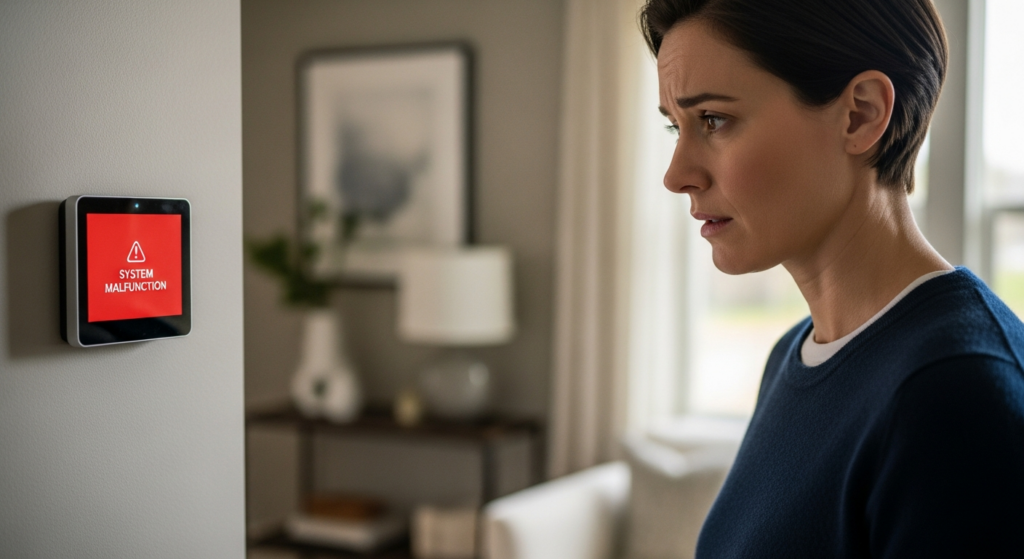
Many homeowners overlook gradual performance drops because they mistake systemic equipment failure for the normal challenges of coping with extreme seasonal heat. Recognizing why these warning signs are so easily missed will help you intervene before minor issues escalate into irreversible system damage.
These eight signs appear gradually enough that they’re easy to attribute to seasonal conditions rather than equipment failure:
-
Short-cycling — The system runs for 5–7 minutes, shuts off prematurely, and restarts repeatedly without completing a cooling cycle. Arizona homeowners often interpret this as the system “struggling with the heat” rather than a symptom of refrigerant loss or a failing thermal limit switch.
-
Ice on the refrigerant line — Visible frost on the copper line running from the outdoor unit to the air handler indicates restricted airflow or a charge below spec. In desert heat, ice forming on equipment looks counterintuitive — so homeowners leave it, allowing the root cause to progress.
-
Warm supply air during peak hours — A functioning system should deliver supply air below 60°F regardless of outdoor temperature, within its design rating. If vents are delivering warm or only slightly cooled air when it’s 108°F outside, the compressor capacity has degraded, not simply been overwhelmed.
-
Unexplained utility bill increases — An APS or UniSource bill that climbs 15–20% in June compared to the prior year without a change in usage habits is a reliable efficiency indicator. Arizona’s summer utility costs are high enough that homeowners attribute spikes to rate increases without examining equipment performance. Replacing a system that has dropped below its rated SEER with an ENERGY STAR certified central air conditioner typically cuts cooling costs 15–20%.
-
Unusual sounds from the outdoor unit — Grinding, screeching, or rattling from the condenser is abnormal in any climate, but Mohave County’s sustained heat accelerates bearing wear in fan motors faster than standard service intervals assume. These sounds are frequently dismissed as “heat noise.”
-
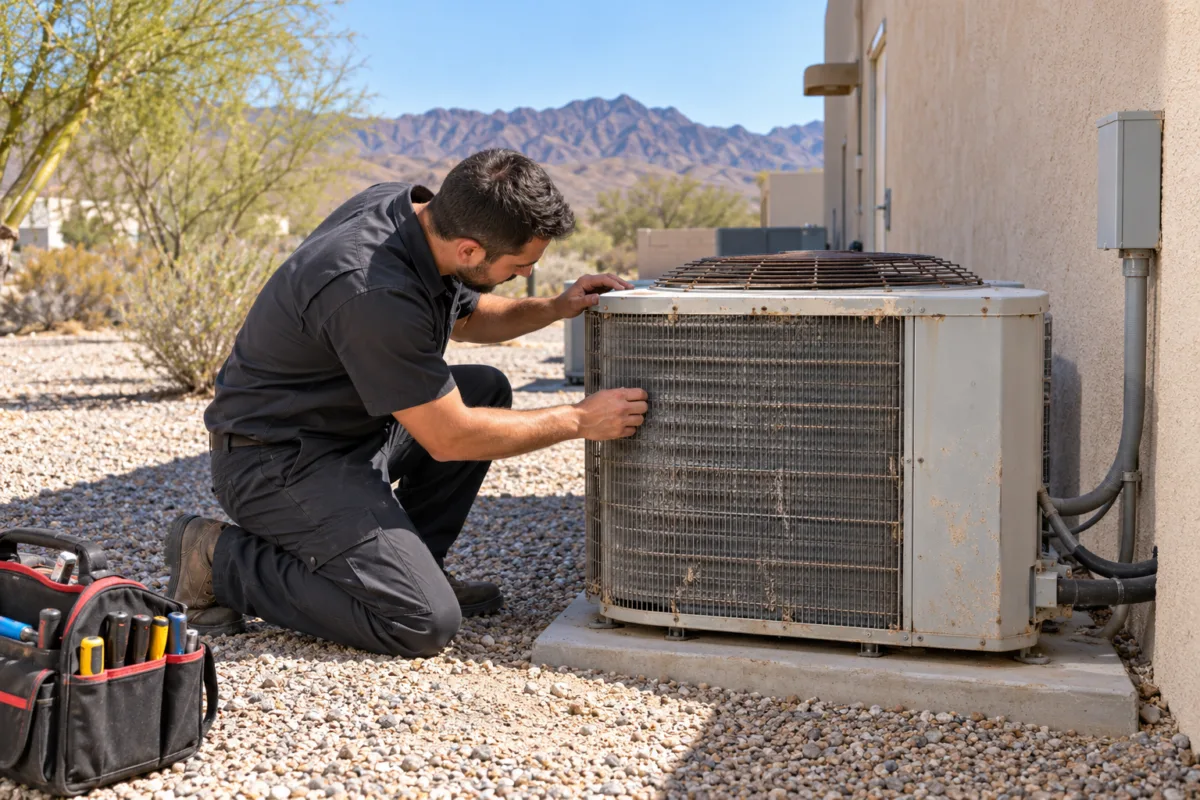
Visible capacitor swelling or contactor scorching — The capacitor and contactor on the outdoor unit are accessible for visual check without opening the panel. Swollen capacitors and scorched contactors indicate components past design life — Arizona’s heat shortens capacitor lifespan to 5–7 years versus 10+ in cooler climates.
-
R-22 recharge requirement — Any system over 15 years old running R-22 that requires recharging is drawing from a depleted supply at elevated cost. Each recharge is a temporary fix on equipment that cannot be economically maintained long-term.
-
Loss of dehumidification during monsoon season — If indoor humidity stays above 55% while the system runs during July–September, the evaporator coil is not removing moisture properly. This failure mode — invisible during dry months — becomes apparent when monsoon humidity arrives overnight. The EPA’s indoor air quality resources outline why sustained indoor humidity above 60% creates conditions for mold growth in ductwork.
The Real Cost of Waiting on AC Replacement in Arizona
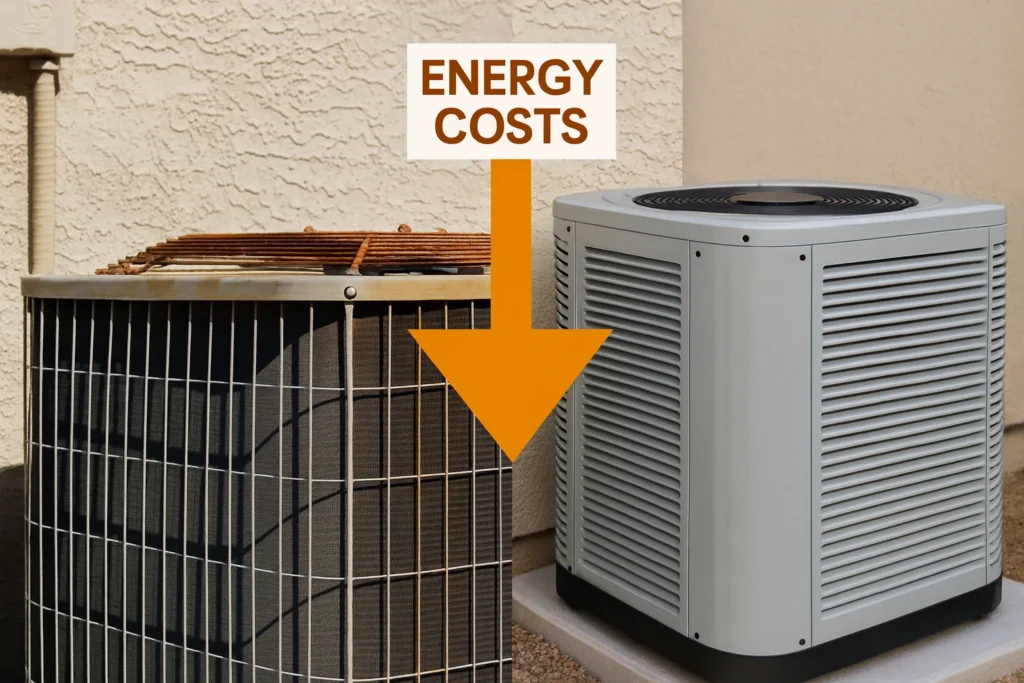
Delaying the decision to upgrade an aging system triggers a compounding chain reaction of mechanical wear that rapidly inflates your monthly operating and maintenance costs. Homeowners must understand how brief periods of neglect accelerate equipment degradation and permanently damage vital system components.
The decline follows a predictable sequence. In the first 30 days after a visible warning sign appears — unusual cycling, reduced airflow, or a frost line on the refrigerant pipe — the underlying cause is typically a failing capacitor or a refrigerant charge that has dropped below operating spec. The compressor compensates by running hotter and longer. In Arizona’s summer heat, that extended runtime accelerates thermal stress on compressor windings in ways that simply do not occur in moderate climates.
By day 60, a compressor running above its rated discharge temperature begins short-cycling — shutting off on thermal protection before completing a full cooling cycle. Short-cycling prevents the evaporator coil from removing humidity from the air properly. During monsoon season, that moisture accumulates in the ductwork, creating conditions for mold growth inside the air distribution system.
By day 90, the compressor windings have degraded past the point of reliable operation. A failed compressor on a system over 12 years old running R-22 refrigerant typically means full system replacement — not just the compressor — because the refrigerant type and efficiency rating no longer justify the repair cost.
The cost differential matters. A capacitor replacement caught at 30 days runs $150–$300. A compressor replacement at the 60-day mark costs $1,500–$2,500. A full emergency system replacement at day 90 — scheduled during peak summer demand — costs $5,000–$9,000 and may involve a wait for available equipment. The same replacement scheduled in the off-season, on your timeline, typically runs $500–$1,500 less.
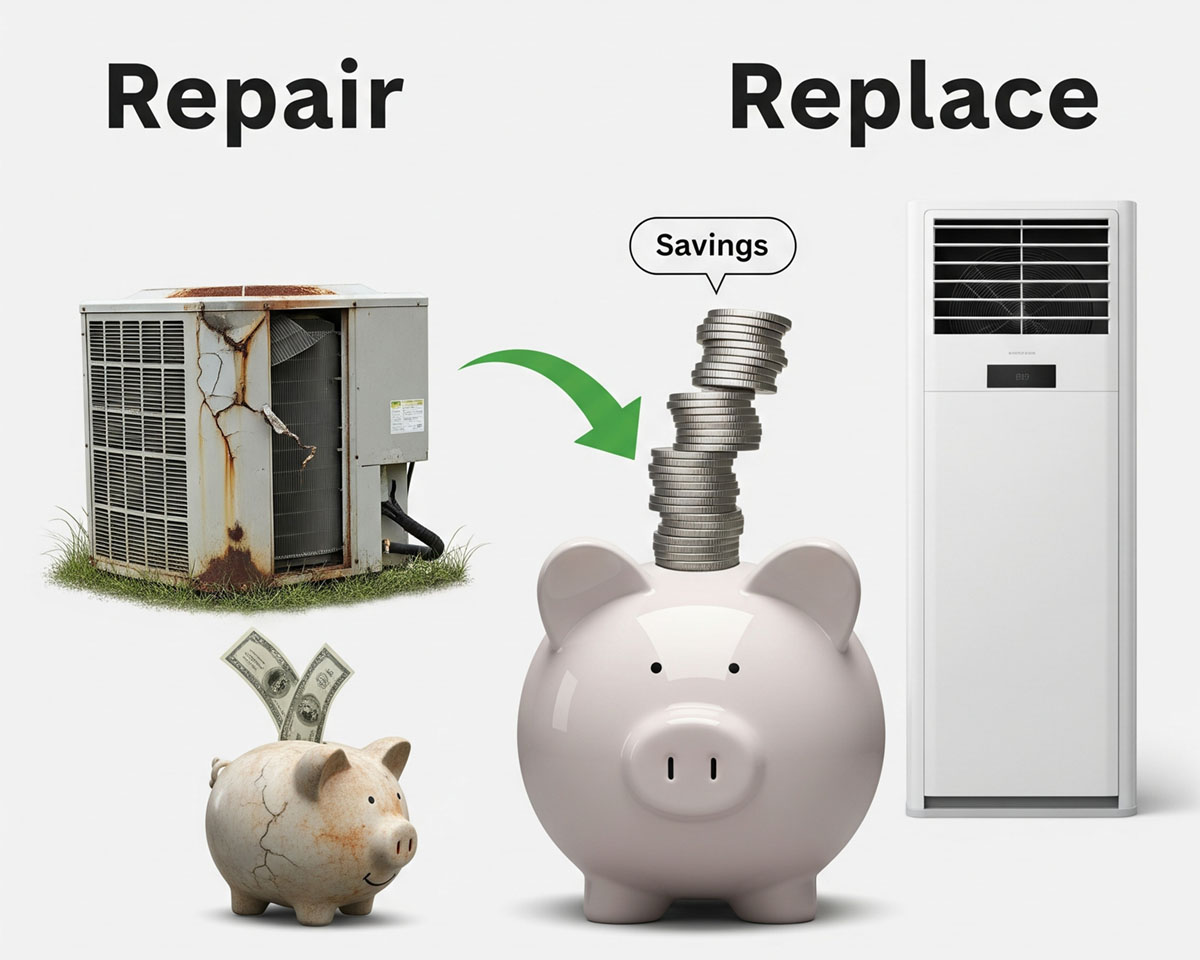
If you are unsure whether to repair or replace, our Fort Mohave guide to AC repair vs. replacement walks through the cost-benefit math for common failure scenarios.
Questions About Ac Replacement Arizona?
Horizon Air LLC starts with testing, not assumptions. We measure the system first and explain exactly what the data shows before recommending any work.
What to Expect at Your AC Replacement Inspection
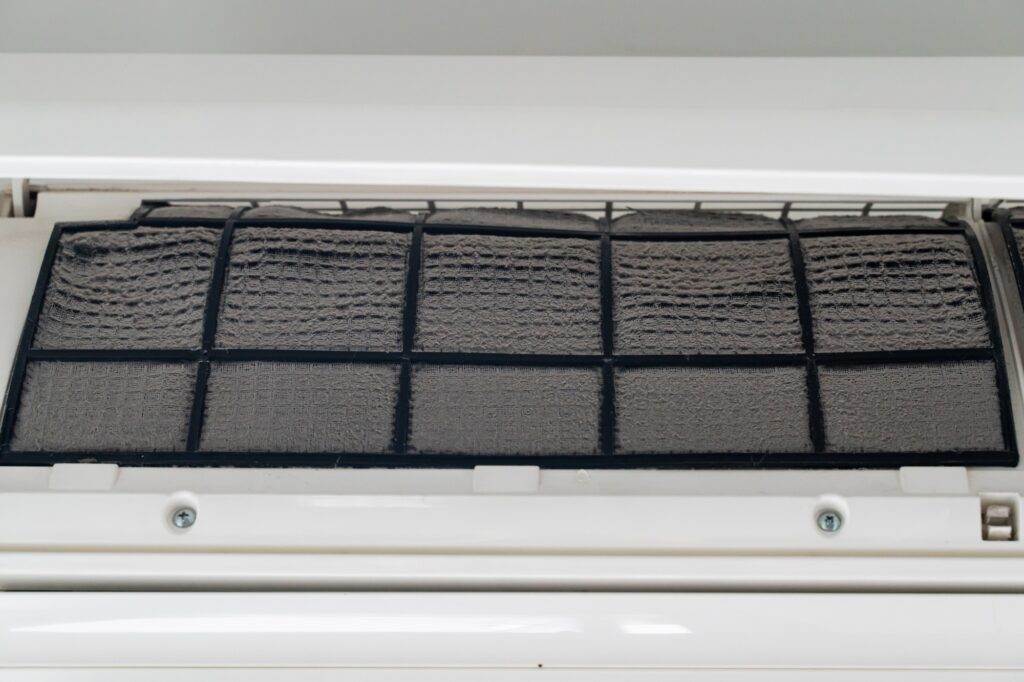
Preparing for a professional system evaluation helps you understand the exact physical state of your cooling equipment and removes the guesswork from the decision-making process. This assessment establishes a clear baseline so you can objectively compare the viability of continued repairs against a full system upgrade.
Knowing the sequence before your technician arrives lets you ask better questions and document what matters.
-
Component visual inspection — The technician examines the capacitor, contactor, refrigerant lines, and condenser coil before starting the system. Components showing visible signs of wear — swelling, scorching, or corrosion — are noted before testing begins, so the condition is on record.
-
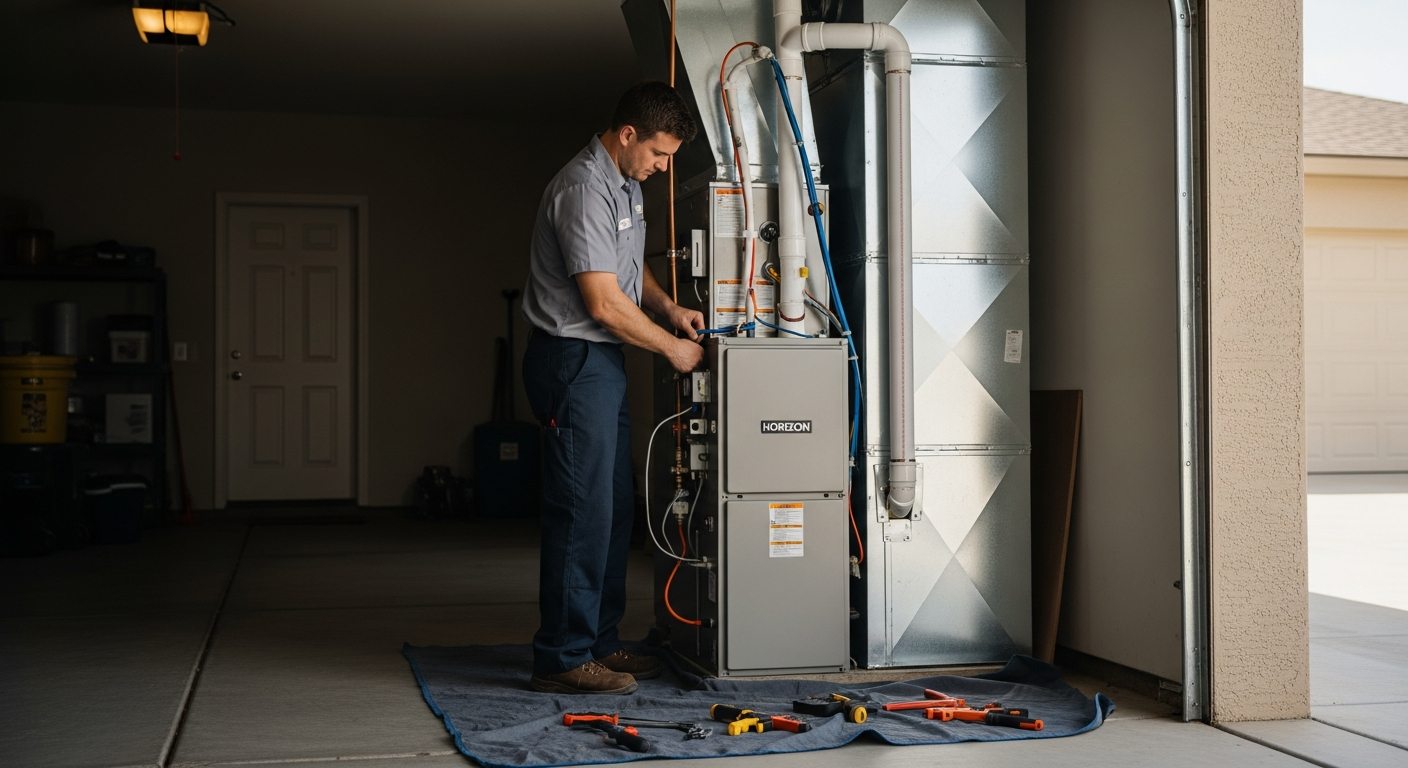
Performance measurement under load — With the system running, the technician measures supply and return air temperature differential, compressor amperage draw, and refrigerant pressure against manufacturer spec. These readings establish whether the system is performing within design parameters or compensating for a degraded component.
-
Written findings report — Horizon Air provides a written summary of each component’s condition and the readings taken during the visit. This documentation is yours to keep — it removes the ambiguity of a verbal assessment and gives you a baseline for comparing future service visits.
-
Repair versus replacement recommendation — Based on the findings, the technician presents each option with an estimated cost range and projected timeline. The goal is a documented choice with clear tradeoffs, not a sales pitch, so you can make the decision that fits your budget and schedule.
For a step-by-step overview of how Horizon Air handles the work, see our guide on what to expect during AC installation in Bullhead City — from equipment removal through final commissioning.
If you are unsure whether to repair or replace, our Fort Mohave guide to AC repair vs. replacement walks through the cost-benefit math for common failure scenarios.