Month-by-month HVAC maintenance calendar for Mohave Valley homeowners. What to do each season to prevent breakdowns, cut energy bills, and extend system life in extreme desert heat.
HVAC maintenance in Mohave Valley doesn’t follow the same schedule as the rest of the country. When your AC runs 7 months a year and regularly operates at outdoor temperatures above 110°F, generic maintenance advice will leave you with a dead system in July. This calendar is built specifically for desert homeowners in the Fort Mohave, Bullhead City, and Mohave Valley area.
January – February: Heating Season Deep Check
Mohave Valley winters are mild compared to northern Arizona, but nighttime temperatures regularly dip into the 30s and 40s from December through February. Your furnace or heat pump works harder than you think during these months.
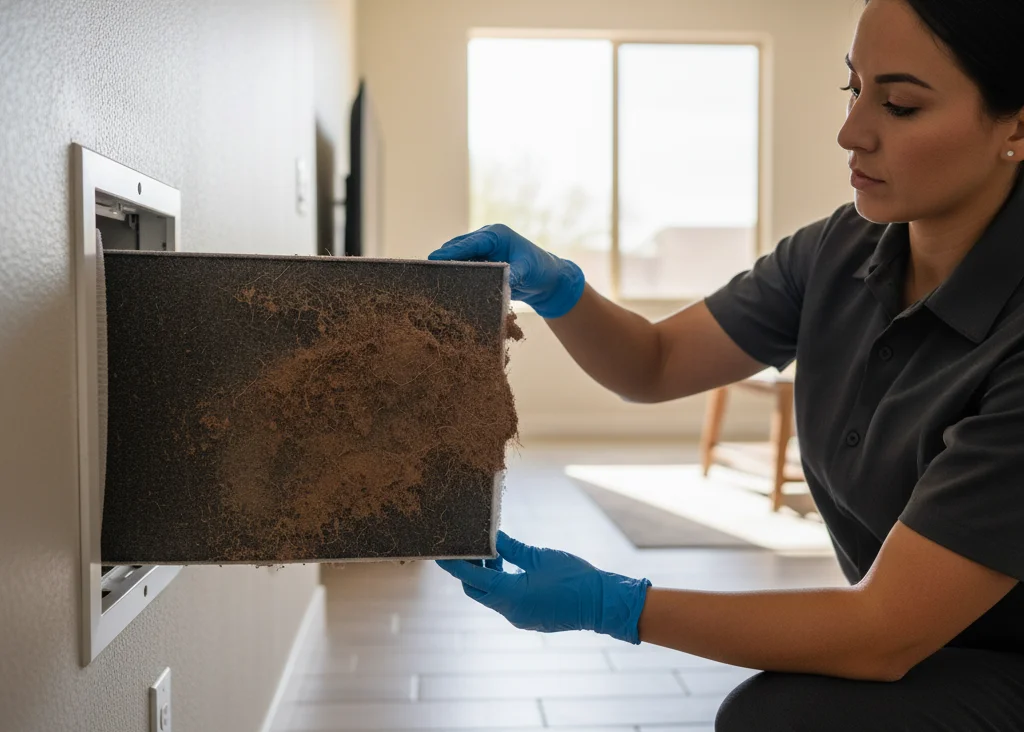
- Replace your air filter. Even though heating runs less than cooling, two months of use in a dusty desert environment is enough to restrict airflow.
- Test your thermostat’s heating mode. Set it 5° above room temperature and verify warm air comes from the registers within 3 minutes. If it takes longer or the air is lukewarm, your heat exchanger or heat strips may be failing.
- Check your carbon monoxide detector batteries if you have a gas furnace. CO leaks are rare but deadly, and cracked heat exchangers are more common in older systems.
- Inspect visible ductwork in your attic or crawlspace for disconnected joints or pest damage. Rodents nesting in ductwork is surprisingly common in desert homes during winter — they’re seeking warmth too.
March: Pre-Cooling Season Tune-Up (Most Important Month)
This is the single most valuable HVAC appointment of the year. Schedule a professional AC maintenance tune-up in March, before temperatures climb and every HVAC company in Mohave County is booked solid.
What a proper spring tune-up includes:
- Refrigerant charge measurement. A system that’s even 10% low on refrigerant loses 20% of its cooling capacity and runs significantly harder. Techs check pressures and compare against manufacturer specs.
- Electrical connection inspection. Loose terminals and corroded wires cause most summer breakdowns. A tech torques all connections and tests capacitor health — capacitors are the #1 failure point in desert AC systems.
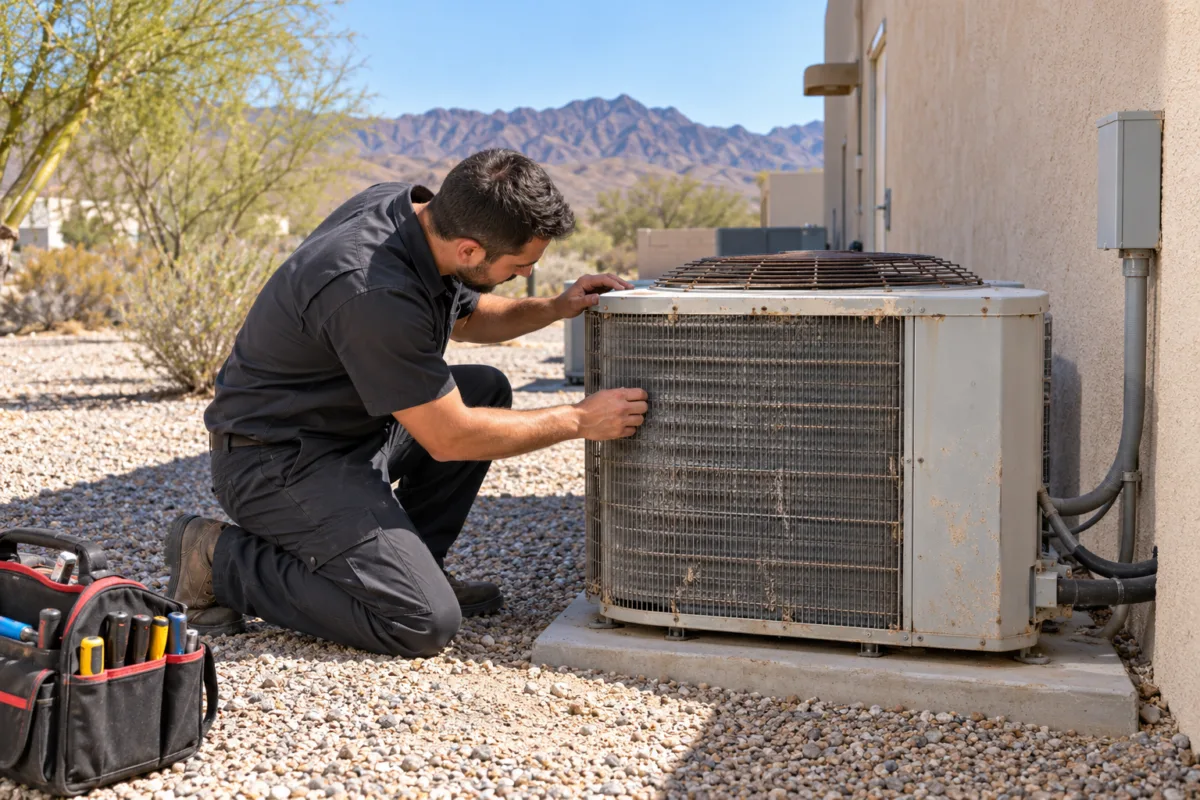
- Condenser and evaporator coil cleaning. A year of desert dust coating the coils acts like insulation on the wrong side. Dirty coils force your compressor to work 30% harder.
- Moving parts lubrication. Fan motors, blower bearings, and any belt-driven components.
- Thermostat calibration. Ensuring the temperature reading matches actual room temperature.
- Drain line clearing. Monsoon debris and algae buildup from last season can clog the condensate drain, causing water damage or system shutoff.
A tune-up costs $80–$150 and typically catches problems that would cost $500+ as emergency repairs in July. It’s the highest-ROI maintenance dollar you’ll spend all year.
April – May: Transition and First Run
Mohave Valley typically sees its first 100°F days in late April or early May. Your AC comes out of hibernation — and problems reveal themselves.
- Run your AC before you need it. On the first warm day, switch to cooling mode and let it run for 30 minutes. Listen for unusual noises, check for musty smells (indicating mold in the air handler), and verify cold air at all registers.
- Fresh filter. Start the cooling season with a brand-new filter. In desert climates, plan to change it monthly through October — not quarterly as most generic advice suggests.
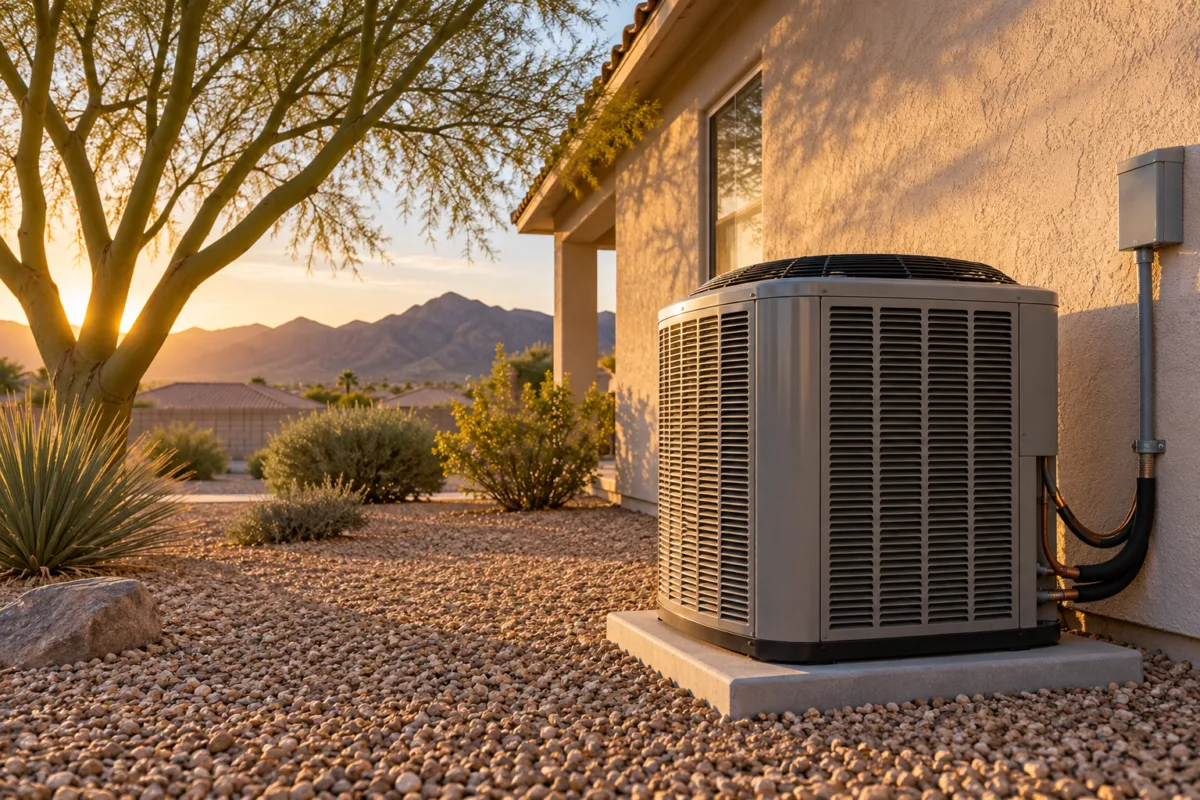
- Clear the condenser area. Remove any debris, tumbleweeds, or landscaping that accumulated around your outdoor unit over winter. Maintain at least 2 feet of clearance on all sides.
- Check your programmable thermostat schedule. Switch from heating to cooling schedule. If you’re still using a manual thermostat, this is the lowest-cost upgrade with the highest return — a basic programmable thermostat costs $25–$50 and can save 10% on cooling by raising the temp when you’re away.
June – August: Peak Season Survival
This is when your system earns its keep. Mohave Valley averages 20–30 days above 110°F each summer, with occasional spikes to 120°F+. Your AC will run 12–16 hours per day during peak weeks.
Monthly tasks (set a phone reminder):
- Change the air filter. Every month. No exceptions. In peak summer with monsoon dust storms, a filter can load up in 3 weeks. A restricted filter is the #1 cause of frozen evaporator coils and compressor strain.
- Rinse the outdoor condenser. Garden hose, gentle spray from inside out through the fins. 10 minutes. Removes the fine desert dust layer that chokes airflow. Do this monthly or after any dust storm.
- Check your electric bill for spikes. A sudden 20%+ jump in consumption with no change in thermostat settings usually means your system is losing efficiency — declining refrigerant, dirty coils, or ductwork leaks.
Emergency awareness:
- If your AC stops working during extreme heat, your first priority is human safety — especially for elderly residents, children, and pets. Our emergency AC repair guide walks you through immediate steps.
- Don’t set your thermostat below 76°F trying to “catch up” during a heat wave. The system can’t overcome a 40°F temperature differential. You’ll just freeze the coil and end up with no cooling at all.
- Know the signs of a failing capacitor: the outdoor fan spins slowly or won’t start, the compressor hums but won’t engage. This is a quick, inexpensive repair if caught early.
September – October: Monsoon Recovery and Transition
Monsoon season (July–September) is hard on HVAC systems. Heavy dust storms sandblast condenser fins, lightning surges damage electronics, and humidity spikes stress dehumidification.
- Post-monsoon condenser cleaning. After the last major storm of the season, give your outdoor unit a thorough rinse. Monsoon mud cakes on fins much harder than regular dust.
- Check for storm damage. Inspect wiring, the condenser fan, and the refrigerant lines for physical damage from debris. Look for bent fins (a $10 fin comb straightens them).
- Replace your filter one more time before the system transitions to lighter use.
- Test your heating system in October on the first cool night. Same process as the April cooling test — run it for 30 minutes and check for smells (a brief burning smell is normal on first run as dust burns off the heat exchanger, but it should clear within 15 minutes).
November – December: Heating Prep and Off-Season
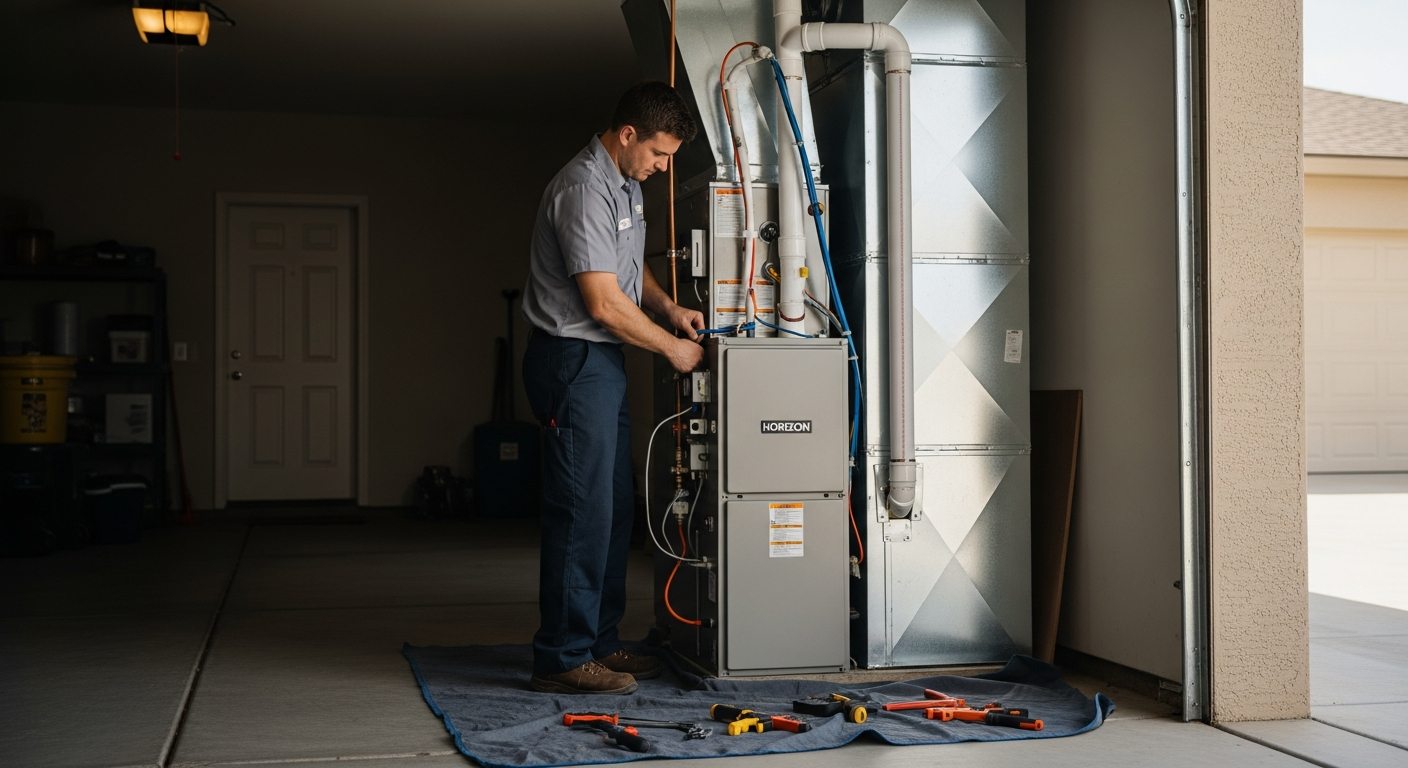
- Schedule a heating system tune-up if you have a gas furnace or dedicated heater. Heat pump systems get checked during the spring AC tune-up since they use the same components.
- Seal air leaks. Weather stripping around doors and caulking around windows loses its seal in desert heat. $30 in materials can save $20–$40/month in heating costs.
- Consider a whole-home surge protector. If you don’t have one and experienced any power events during monsoon season, now is the time. A $200–$400 installation protects your HVAC control board, capacitors, and every other electronic device in the house.
- Duct inspection. Every 3–5 years, have your ductwork professionally inspected and sealed. The EPA estimates that typical homes lose 20–30% of conditioned air through duct leaks — in a desert home running extreme differentials, that translates to real money.
The Real Cost of Skipping Maintenance
Numbers tell the story better than warnings. Here’s what deferred maintenance costs Mohave Valley homeowners:
| Maintenance Task | Cost to Do | Cost if Skipped |
|---|---|---|
| Monthly filter change | $6–$10/month | Frozen coil repair: $200–$500 |
| Annual professional tune-up | $80–$150/year | Emergency compressor failure: $1,200–$2,500 |
| Condenser coil rinse | Free (garden hose) | Reduced efficiency: $30–$60/month in extra energy |
| Capacitor check during tune-up | Included in tune-up | Emergency weekend capacitor replacement: $250–$400 |
| Duct sealing (every 3–5 years) | $300–$600 | 20–30% conditioned air loss: $600–$1,200/year |
The math is straightforward: $250–$350/year in preventive maintenance prevents $1,000–$3,000 in emergency repairs and extends system life by 3–5 years. On a $8,000 installation, that’s the difference between costing $571/year (14 years) and $1,000/year (8 years).
For homeowners thinking about whether their current system is worth maintaining vs. replacing, our AC replacement decision guide walks through the repair vs. replace math in detail.
And if your furnace is the aging component, our Mohave County HVAC contractor guide covers what to look for in a qualified technician for heating work.
Need Help With This Today?
Use the quick actions below to get answers, book the right service, or talk directly with Horizon Air before the issue gets more expensive.
Frequently Asked Questions
Quick answers for the questions homeowners ask right before they call, schedule, or compare their next move.
How often should I change my AC filter in Mohave Valley?
Monthly during cooling season (April through October). Desert dust, monsoon debris, and landscaping particles load filters 2–3x faster than humid climates. A clogged filter is the single most common cause of preventable AC failures in our area. Standard 1-inch filters run $6–$10 each; buy a 12-pack to keep them on hand.
What does an annual HVAC tune-up include and is it worth it?
A proper tune-up includes refrigerant charge measurement, electrical connection inspection and tightening, condenser and evaporator coil cleaning, moving parts lubrication, thermostat calibration, and drain line clearing. It costs $80–$150 and consistently catches $500+ problems before they become emergency repairs during peak heat. In a climate where your AC runs 7+ months per year at extreme load, it’s the single best investment in system longevity.
Can I do my own AC maintenance or do I need a professional?
You can and should handle monthly filter changes, quarterly condenser rinses, and clearing debris from around the outdoor unit. But refrigerant checks (requires EPA certification), electrical testing, and coil deep-cleaning require a licensed technician with proper tools and diagnostic equipment. The DIY tasks handle about 60% of preventable issues; the annual professional tune-up catches the other 40% that require specialized knowledge.
Next Helpful Reads
Pick the next guide that matches the reader’s decision stage so the flow feels helpful instead of dumped.
Horizon Air, LLC