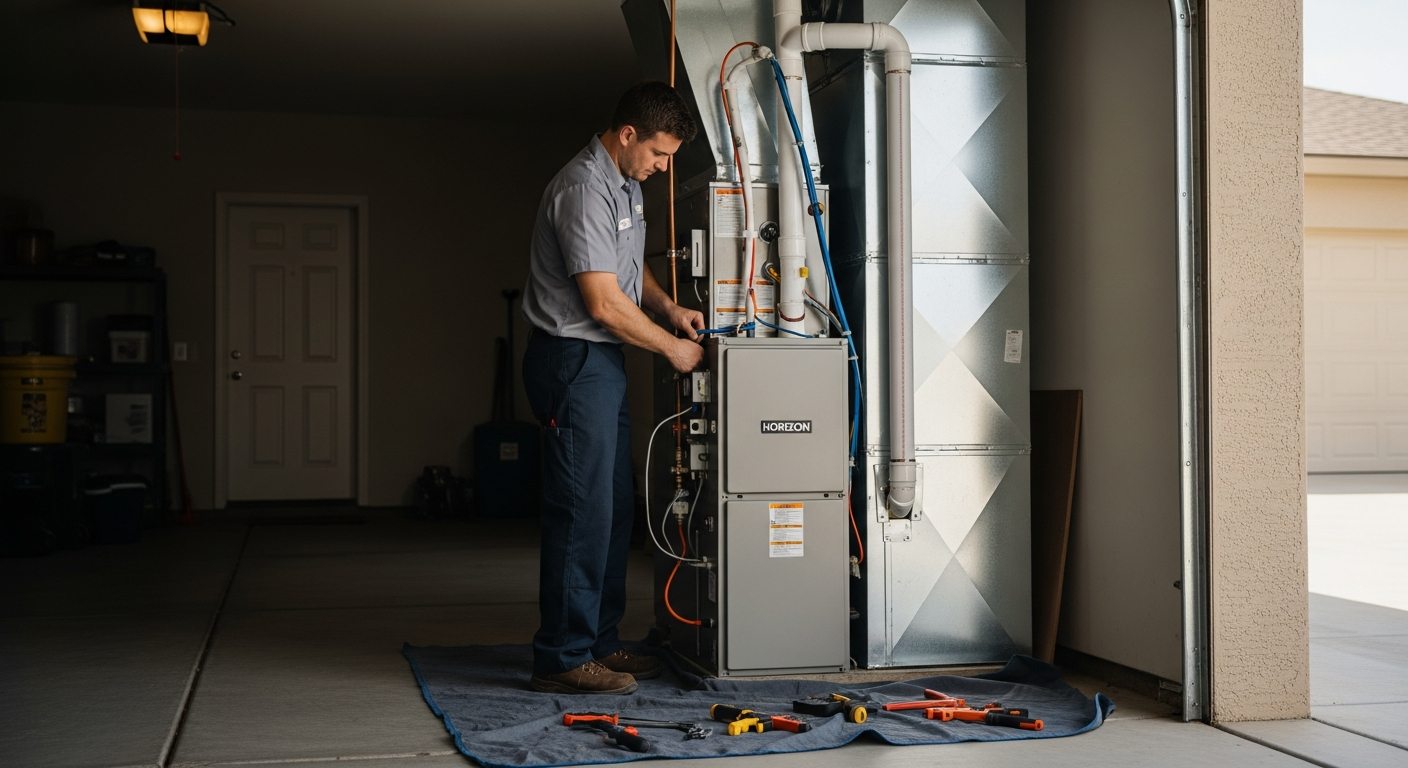
Neglecting your indoor air quality Arizona home environments suffer from can lead to persistent respiratory irritation, endless dust buildup, and inefficient cooling systems.
Neglecting your indoor air quality Arizona home environments suffer from can lead to persistent respiratory irritation, endless dust buildup, and inefficient cooling systems. When desert winds carry fine dust and pollen directly into your living spaces, your family breathes in these trapped contaminants daily. Improving your filtration and ventilation is the only way to restore comfort and protect your health. This guide covers the essential steps to clean, monitor, and maintain your home air. If dust returns almost immediately after cleaning, leaky ductwork is often the hidden cause — our Arizona duct sealing guide explains how sealing fixes it at the source.
The Complete Indoor Air Quality Checklist for Arizona Homeowners
Maintaining a healthy living environment in the desert requires a systematic approach rather than reacting only when breathing becomes difficult. Skipping a single routine check can allow airborne dust and allergens to silently accumulate, eventually overwhelming your filtration system and triggering severe respiratory discomfort.
In a moderate climate, a cooling system gets three to four months of hard use before shoulder-season temperatures allow a natural maintenance window. Mohave County homeowners run air conditioning from April through October without interruption — a run time that gives desert dust seven or more months per year to load filters, coat coil surfaces, and accumulate in ductwork. Standard maintenance intervals designed for moderate climates underestimate this load by a factor of two or more.
The concrete consequence of skipping a single filter change in peak season: a clogged filter restricts airflow enough to freeze the evaporator coil. A frozen coil shuts down cooling entirely. In Bullhead City summer heat, restoring the interior temperature after an unplanned shutdown takes four to six hours after the system restarts — time when indoor temperatures can exceed 90°F. The checklist that follows is built around Mohave County’s actual use cycle, not a national average.
Desert homes face unique IAQ challenges — our guide to indoor air quality for desert homes breaks down what makes Mohave County conditions different from the national average.
What to Check before Calling for Indoor Air Quality Service
Before you schedule a professional technician to evaluate your home, performing a preliminary walkthrough can help isolate simple issues you can resolve yourself. This checklist ensures you do not pay for a service call only to find out a basic component simply needed a quick manual adjustment.
Complete each step before scheduling a service call — these checks take under 30 minutes total and resolve the most common IAQ complaints without a technician.
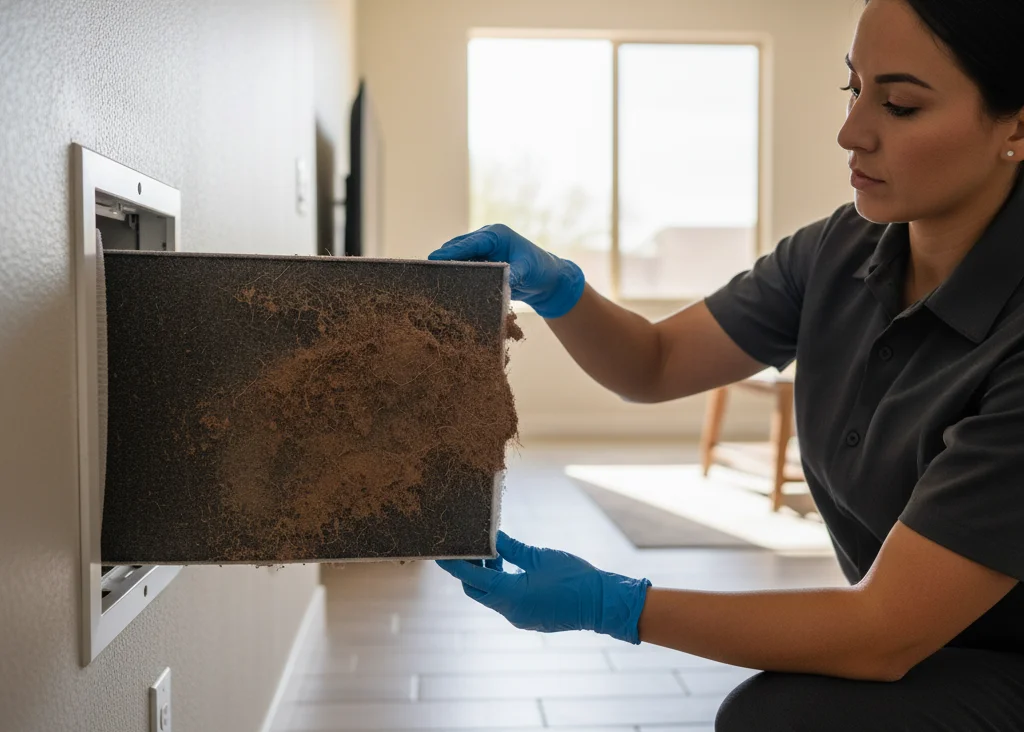
- [ ] Replace or inspect the air filter — Pull the filter and hold it to light. If airflow is visibly blocked, replace it before calling; a clogged filter causes most airborne dust and reduced airflow complaints. (5 min)
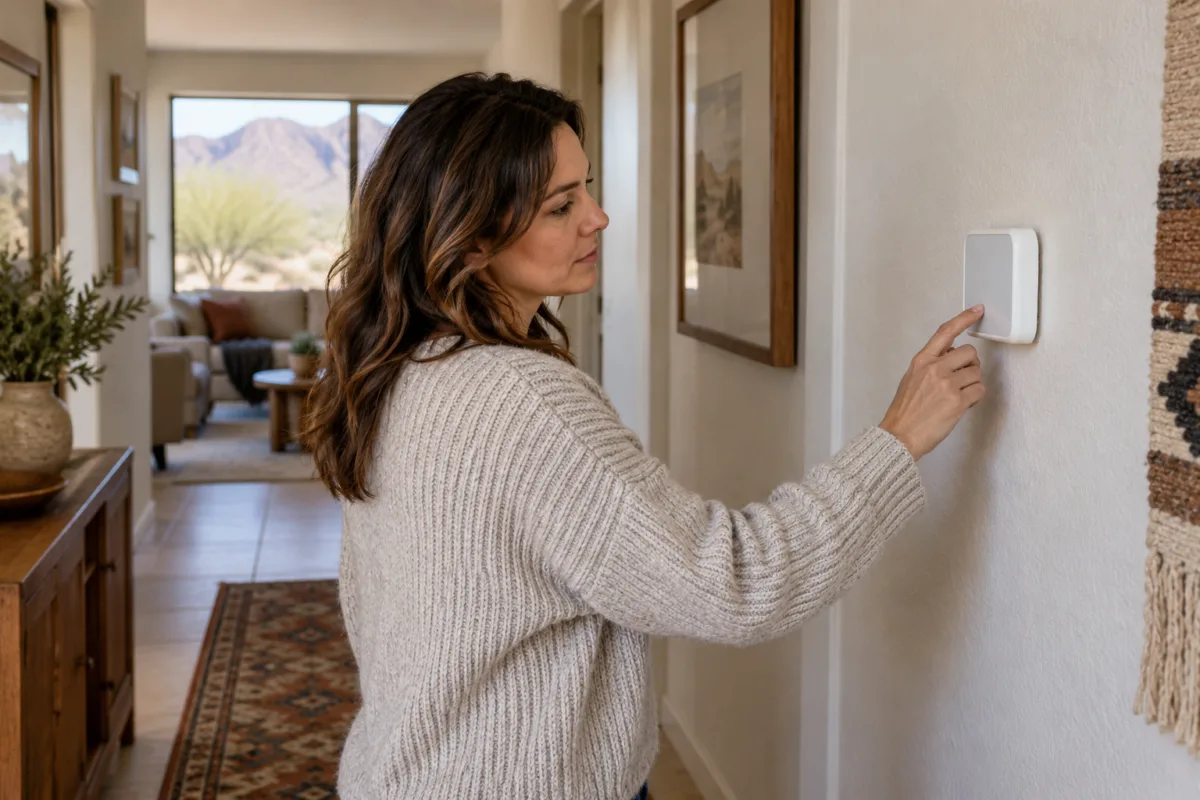
- [ ] Set the thermostat fan to “Auto,” not “On” — Fan-always-on mode recirculates air continuously without full dehumidification, spreading moisture and dust. Verify this setting before attributing humidity problems to the equipment. (2 min)
- [ ] Check all supply registers for blockages — Move furniture, boxes, or curtains blocking any register. Blocked registers create pressure imbalances that pull unconditioned air through wall gaps and electrical chases. (5 min)
- [ ] Inspect the condensate drain pan — Look for standing water under the air handler. Standing water is the primary cause of mold growth inside the air handling unit and appears before any visible contamination on surfaces. (2 min)
- [ ] Note discoloration at register grilles — Dark staining around any grille face indicates contamination traveling through the ductwork, not surface dust. Photograph and note which rooms before calling. (5 min)
- [ ] Run the system and note first-start odors — Stand near a return vent when the system first kicks on. A musty odor in the first 30 seconds indicates biofilm on the evaporator coil. Reporting this observation helps a technician locate the source faster. (2 min)
- [ ] Check accessible duct connections in garage or utility closet — Confirm no obvious disconnects or gaps at duct joints. A partially separated joint introduces unconditioned exterior air directly into the supply stream. (10 min if accessible)
What a Professional Indoor Air Quality Inspection Covers
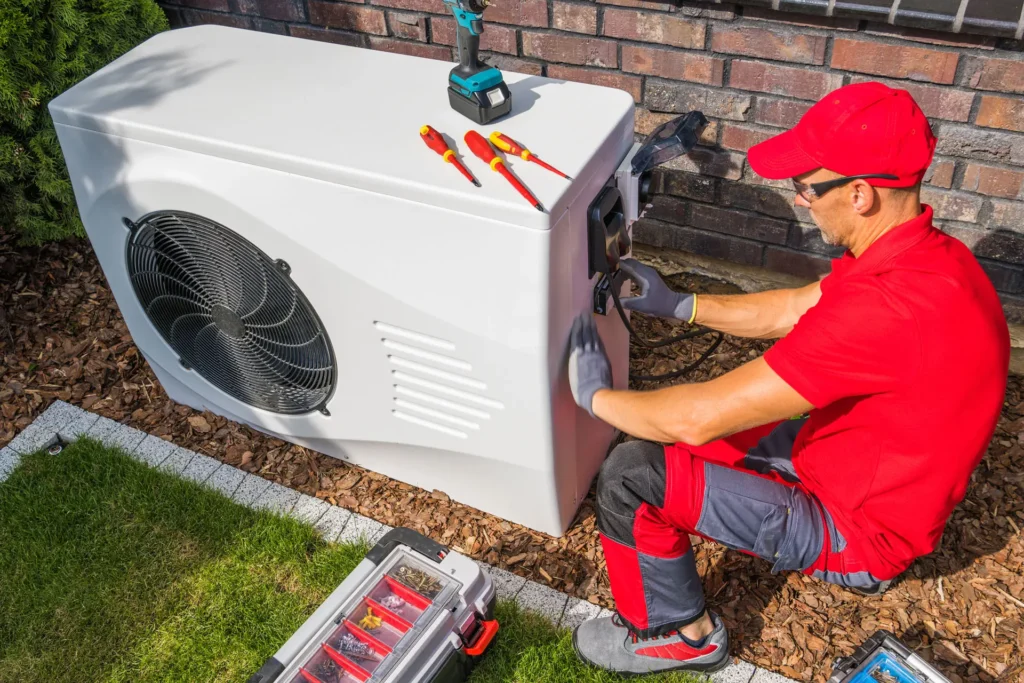
Understanding the scope of a professional diagnostic visit helps you evaluate whether a technician is thoroughly assessing your home or merely performing a superficial scan. A comprehensive inspection should examine hidden system components where mold, pathogens, and fine dust tend to harbor out of sight.
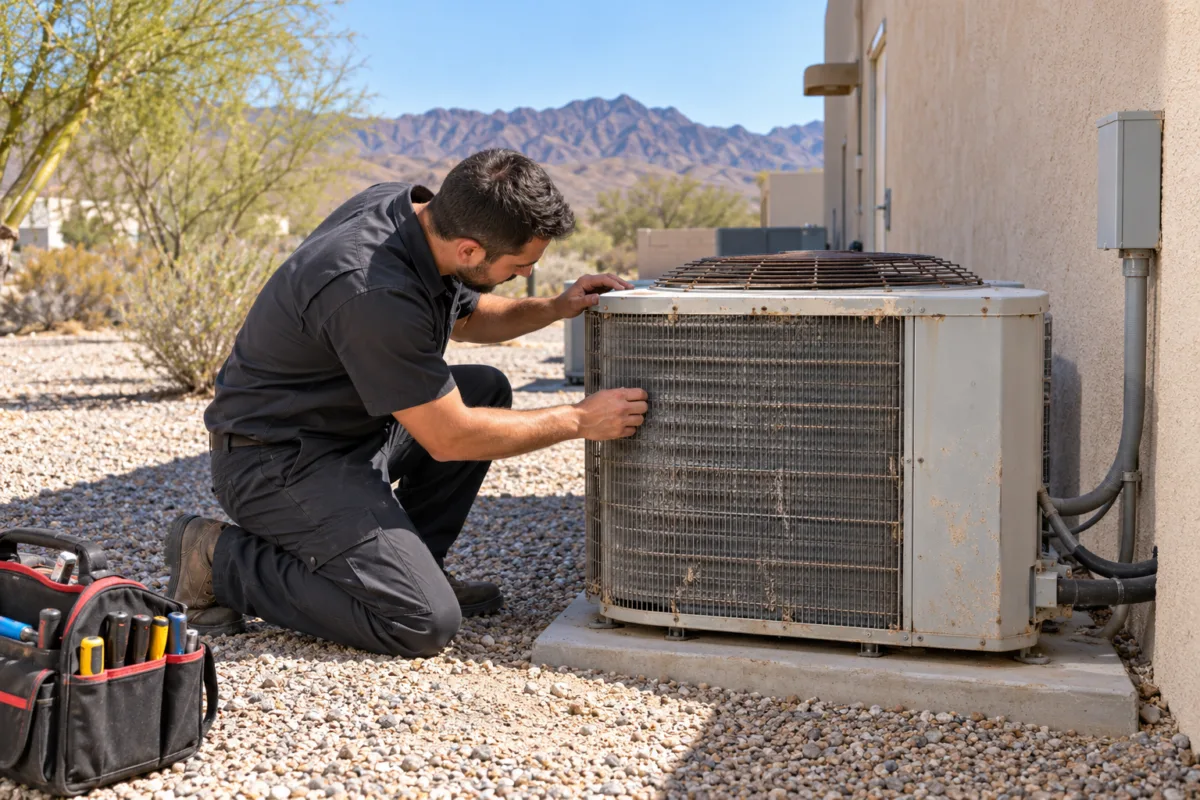
A thorough inspection by Horizon Air covers the following components — each represents a location where contamination builds before symptoms appear.
- Evaporator coil surfaces — Mold and biofilm accumulate on coil fins during monsoon season and recirculate through every room on every cycle until removed.
- Condensate drain line — A blocked drain creates standing water inside the air handler, which becomes a mold incubator within 24–48 hours under monsoon humidity.
- Filter bypass gaps — Gaps around the filter frame route unfiltered air directly into the supply plenum; these bypasses require physical inspection to detect.
- Supply and return ductwork — Exposed penetrations, disconnected joints, and debris accumulation in return ducts introduce unconditioned air and exterior particulates.
- Air pressure balance — Imbalanced airflow creates negative-pressure zones that pull dusty unconditioned air through wall penetrations and electrical chases.
- UV system output — A UV bulb past its rated hours emits visible light but provides no microbial control; output requires meter confirmation, not visual check.
- Particulate air sampling — Identifying specific contaminant types — not just levels — determines whether your filtration system is matched to the actual particulate load in your home.
- Coil surface moisture — A moisture reading at the coil fins identifies humidity conditions that support mold growth before visible contamination appears.
- Return duct leakage — Leaky return ducts in attic spaces pull attic dust past all filtration before air reaches living areas.
- Carbon monoxide screening — Combustion appliances near the air handler can introduce CO into supply air under specific pressure differentials — a hazard that takes minutes to screen and is rarely self-checked.
- Duct insulation condition — Damaged insulation in unconditioned spaces causes exterior condensation on duct surfaces, supporting mold growth invisible from inside the home.
- Register and grille accumulation — Visible debris at registers is a downstream indicator of ductwork contamination that filter replacement alone will not resolve.
Ductwork is one of the most overlooked contamination vectors — learn what professional duct sealing in Mohave County resolves before a full IAQ assessment.
Questions About Indoor Air Quality Arizona?
Horizon Air LLC starts with testing, not assumptions. We measure the system first and explain exactly what the data shows before recommending any work.
The Seasonal Indoor Air Quality Schedule for Arizona
Aligning your air quality maintenance with the distinct desert seasons ensures your system is prepared for the specific environmental threats of each period.
Common Indoor Air Quality Mistakes Arizona Homeowners Make
Many homeowners unknowingly sabotage their own breathing environment by falling into routine maintenance habits that do not suit the harsh desert climate. Recognizing these common missteps can save you from premature equipment failure and unnecessary utility expenses.
Each mistake below shows up in standard maintenance guides that were not written for Mohave County conditions.
Using 90-day filter replacement intervals — Standard guidance calls for changes every 90 days. Haboob season loads a 1-inch filter to capacity in 30–45 days. A clogged filter running past its effective life forces air around the frame rather than through it — contaminating the supply plenum with the dust it was installed to catch.
Running the thermostat fan on “On” for better filtration — Continuous fan operation increases filter contact time, but it also circulates air when the coil is not dehumidifying. During monsoon months, this actively distributes moisture-laden air through every room rather than removing it.
Skipping the post-monsoon inspection — Most homeowners wait until spring to schedule service. Mold that establishes on coil surfaces during July–September has six months to grow before the next visit. Post-monsoon is the highest-yield inspection window of the year, not spring.
Treating bathroom exhaust fans as optional — In monsoon humidity, exhaust fans are the first line of moisture control for high-humidity rooms. Leaving them off concentrates moisture that migrates directly into the return air stream and reaches the air handler.
Assuming a new filter means clean air — A fresh filter catches incoming particles; it does not clean ductwork, coil surfaces, or drain lines already contaminated. Homeowners who replace filters on schedule but skip coil inspections see temporary improvement followed by a return to baseline — because the contamination source remains upstream.
If you missed your post-monsoon inspection, our guide to Arizona winter indoor air quality covers what to address before heating season.
Horizon Air LLC