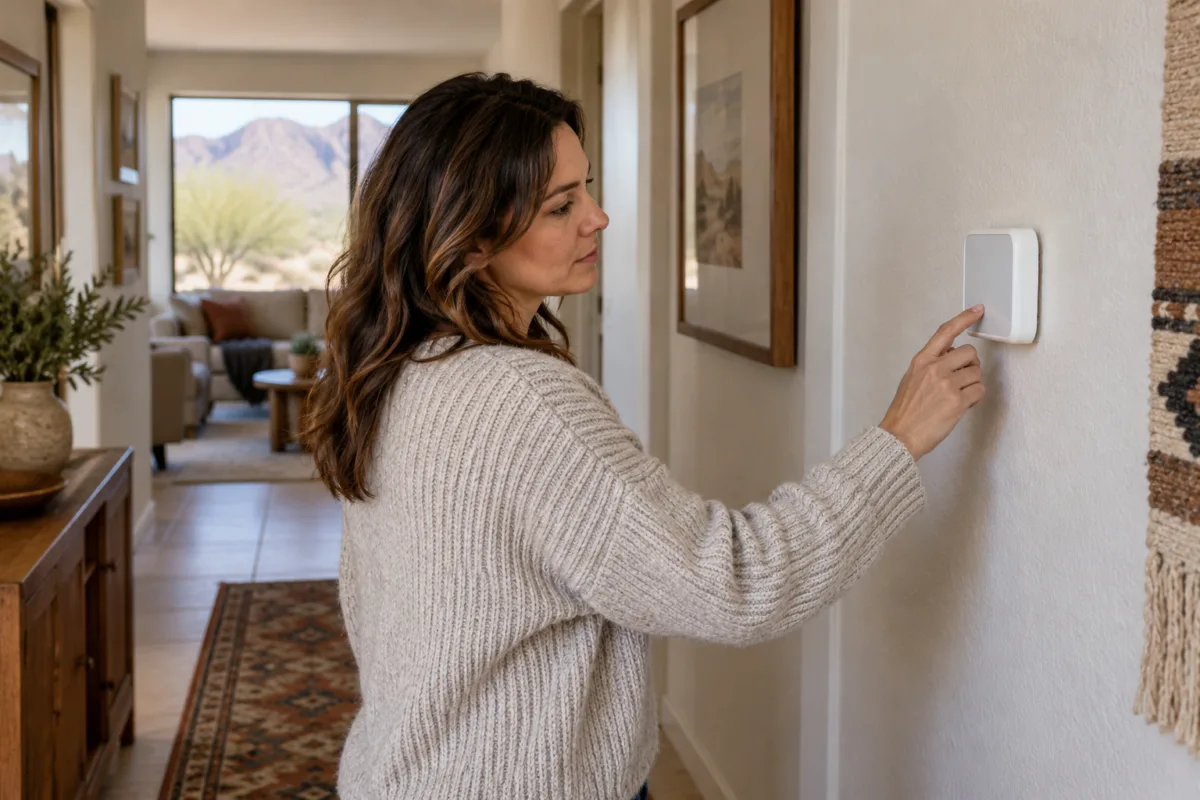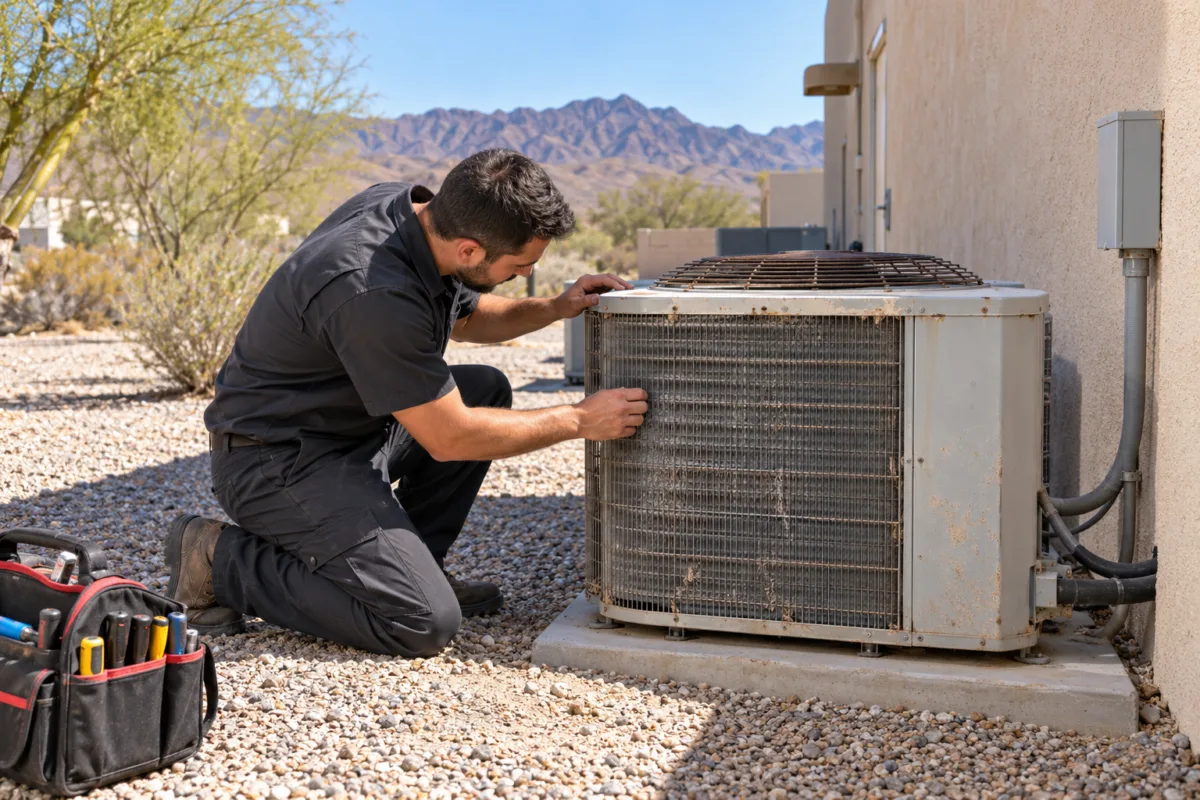
A smart thermostat is worth it for schedules and control, not for a promised bill cut. Check that the model fits your system before you buy.
Short answer: a smart thermostat in Mohave Valley is worth considering if you want easier schedules and phone control. Summer days here are very hot, so control over the AC matters.
It is not a guaranteed way to cut your bill by a set percentage. ENERGY STAR says certified models save about 8% of heating and cooling bills, or about $50 a year, on average across the U.S.
A professional installation usually costs about $200 to $500 nationally, according to HomeAdvisor. Whether a model works in your home depends on your equipment and the wiring behind your current thermostat.

What Affects Smart Thermostat Cost in Mohave Valley?
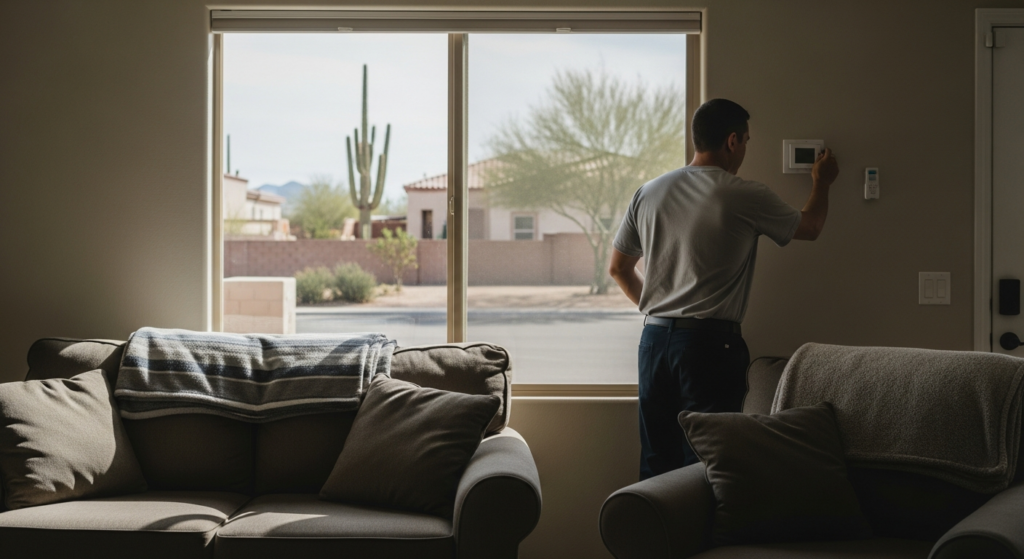
There is no single installation price that applies to every home. The thermostat itself is only one part of the job. A technician may need to confirm your equipment works with the new thermostat and check the wiring behind your current one. The job can also include adding a power connection, connecting add-ons, or sorting out older controls. The thermostat must also be set up for how your system heats and cools.
According to HomeAdvisor, most professional smart thermostat installations cost $200 to $500 across the U.S., around $350 on average. The thermostat unit alone costs $70 to $800, depending on features and brand. These are national market figures, not a Horizon Air price.
Market range, not a Horizon price.
The most useful way to compare quotes is to ask what is included rather than focusing on one advertised number. A written estimate should make clear what the scope covers. It might be only a thermostat swap. It might also include wiring, control-board work, separate temperature zones, add-on setup, or other repairs found during the visit.
Common cost drivers include:
- Your heating and cooling system. Heat pumps, systems with more than one level of heating or cooling, separate-zone controls, and add-on equipment can need different thermostat features and setup.
- Existing thermostat wiring. Some smart thermostats need an extra wire for power (often called a common or C-wire) or another power arrangement the manufacturer supports. The condition and route of the existing wiring can change the installation scope.
- Thermostat location and access. Moving a thermostat or running new cable is a different project from replacing a compatible device in the same location.
- System condition. A thermostat cannot fix a mechanical, airflow, electrical, or duct problem elsewhere in your heating and cooling system. If the original complaint is uneven comfort or high energy use, diagnosis may need to go beyond the wall control.
- Features and accessories. Remote sensors, connection to separate zones, humidity control, and other options can change both which thermostat you need and how long setup takes.
Compatibility Matters More Than the Brand Name
Popular smart thermostats are designed to work with many residential HVAC systems, but model compatibility still matters. Before buying a thermostat, find out what kind of heating and cooling equipment you have. Then note what your current thermostat controls. It may run a basic system, a heat pump, backup heat, separate temperature zones, or other add-ons.
If you have a heat pump or more than one thermostat, say so when you call. Those setups can need a different thermostat.
It also helps to avoid a common mistake: treating a thermostat problem and a heating and cooling system problem as the same thing. Suppose the air conditioner is not cooling, the system keeps switching on and off in short bursts, or rooms differ a lot in temperature. Replacing the thermostat without diagnosing the system may not fix the cause.
If comfort problems seem tied to airflow or duct leaks, read Horizon Air’s guide to duct sealing in Arizona. A thermostat is one control in the larger system, not a substitute for needed repairs.
For work on the cooling equipment itself, see the AC installation and replacement page.
How Much Energy Can a Smart Thermostat Save?
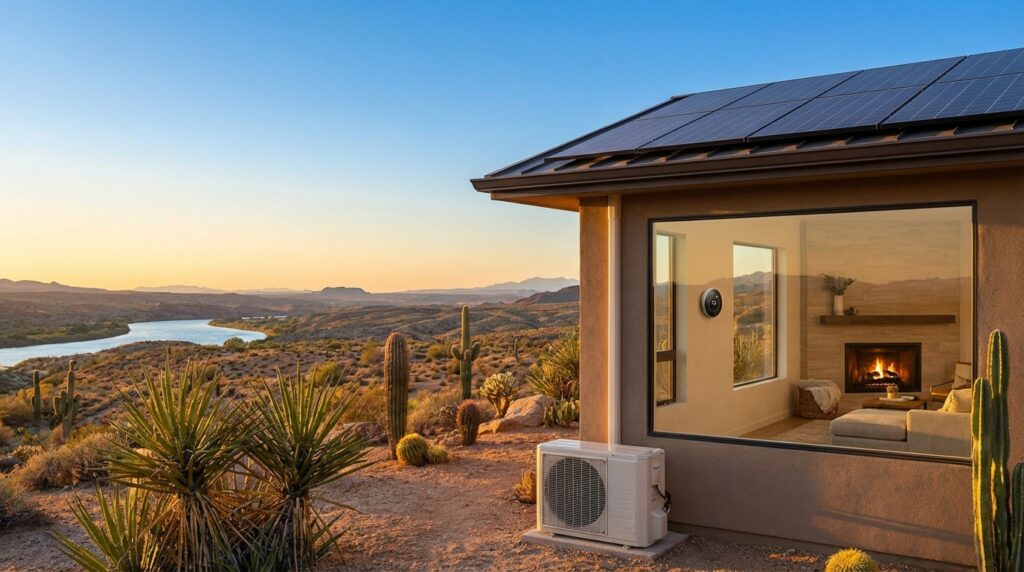
The safest answer is that savings vary by home and behavior. ENERGY STAR says certified smart thermostats save about 8% of heating and cooling bills, or about $50 per year, on average across the U.S. It notes that actual savings vary with climate, comfort preferences, occupancy, and HVAC equipment.
According to ENERGY STAR, savings are larger in homes that sit empty much of the day. It puts that at about $100 a year, compared with about $50 a year on average.
Both figures cover heating and cooling together. They are national averages, not a Mohave Valley or Horizon Air figure.
In a hot Mohave Valley summer, the gain you notice first may be control: schedules and changes from your phone.
That national average is useful context. It is not a promise that a Mohave Valley household will save 8% of its whole utility bill. Be wary of a quote that promises a fixed cut such as 20% of your bill. Your electric bill may include loads unrelated to HVAC, and two homes with similar bills can have very different cooling usage.
For current ENERGY STAR information, see the ENERGY STAR smart thermostat FAQ.
A Better Way to Evaluate Your Own Results
If savings matter to your buying decision, compare your own usage before and after installation instead of relying on a generic payback promise.
- Record several comparable billing periods before the change.
- Note major differences in weather, occupancy, thermostat settings, or equipment operation.
- After installation, compare similar periods and review the thermostat’s runtime or energy reports when available.
- Separate thermostat savings from other changes such as new HVAC equipment, duct repairs, insulation, or major household-use changes.
Even then, the result is an estimate rather than a laboratory test. The practical benefit may include convenience and better schedule control in addition to any energy reduction.
Before You Call for an Estimate
If the thermostat has failed and the home is not cooling, treat it as a service problem, not an upgrade. A technician should confirm the thermostat is the cause before replacement.
If you are planning an upgrade, scheduling before the busiest cooling-service periods can make appointment planning easier. Exact availability varies, so no one month is always cheapest.
When you call for an estimate, it helps to have this ready:
- Your current thermostat make and model, if known.
- The type and model of your heating and cooling equipment, if you can find it.
- Whether the home is split into separate temperature zones.
- Features you want, such as remote sensors or app control.
- Whether you will accept a manufacturer-specific thermostat if the system requires one.
That information makes the first conversation more useful. Final compatibility may still need an on-site inspection.
What About Rebates, Tax Credits, and Financing in 2026?
Incentive information needs to be checked at the time of purchase because programs and eligibility rules change.
Do not assume the former Energy Efficient Home Improvement Credit (section 25C) applies to a smart thermostat installed in 2026. Current IRS guidance limits the credit to property placed in service through December 31, 2025.
See the current IRS Energy Efficient Home Improvement Credit guidance before relying on any tax incentive. A qualified tax professional can advise on your situation.
Check utility incentives directly with the utility that serves your address. A program from a prior year, another territory, or a third-party article is not a current 2026 rebate. Ask the provider for current proof.
Confirm financing availability and terms directly before you put them in a project budget. Do not build a payback calculation around financing that has not been quoted for the actual project.
Questions to Ask Before Choosing a Smart Thermostat
Four questions can prevent a lot of confusion:
- Is this thermostat compatible with my exact heating and cooling equipment?
- Who will set the thermostat up for the equipment after installation?
- What manufacturer account or app will I need, and what happens to heating and cooling if the internet is down?
- Are any rebates or promotions being discussed current for my utility and installation date?
If a quote promises a precise percentage of bill savings, ask what evidence and assumptions support that number for your home.
Frequently Asked Questions
Quick answers to the questions people ask before they call or book.
Will a smart thermostat cut my electric bill by 20%?
No, do not count on that. ENERGY STAR’s national average is about 8% of heating and cooling bills, or about $50 per year. Results vary with climate, occupancy, comfort habits, and equipment.
Does a smart thermostat work with every air conditioner or heat pump?
No single thermostat should be assumed compatible with every system. Your equipment type, any add-ons, and the wiring you have all matter. Check the exact thermostat model against your heating and cooling system before installation.
Do I need a new wire for a smart thermostat?
Sometimes. The answer depends on the thermostat, the existing cable, and how your system is controlled. A technician can inspect the current wiring and determine whether the chosen model can be installed as-is or needs additional work.
Are there smart thermostat rebates in Mohave Valley in 2026?
Do not assume a rebate exists based on an older article or a program from another utility territory. Check the utility serving your address for current eligibility, approved products, application requirements, and program dates before purchasing equipment based on an incentive.
Can I claim the federal 25C credit for a 2026 smart thermostat installation?
Current IRS guidance limits the Energy Efficient Home Improvement Credit to property placed in service through December 31, 2025. A 2026 installation should therefore not be advertised as qualifying for that expired credit. Consult current IRS guidance or a qualified tax professional for your specific circumstances.
Can a smart thermostat fix uneven rooms or high energy use?
It can improve scheduling and control, but it cannot repair duct leakage, airflow restrictions, refrigerant problems, failing equipment, or other mechanical issues. If comfort or energy use changed suddenly, have the heating and cooling system checked instead of assuming the thermostat is the only cause.
Contact Horizon Air LLC
Horizon Air serves Fort Mohave, Bullhead City, Mohave Valley and Golden Valley. Call or send a message to talk through your system before you buy a thermostat.
Horizon Air LLC