AC not cooling in Mohave Valley? Run these five two-minute checks before you call for repair. They solve some breakdowns on the spot — and when they don’t, they make your service visit faster and your diagnosis more accurate.
When your air conditioner stops cooling on a 115°F Mohave Valley afternoon, every minute feels urgent. But the fastest fix isn’t always a phone call. AC troubleshooting in Mohave Valley starts before you dial: a surprising share of summer “breakdowns” turn out to be tripped breakers, dust-clogged filters, and thermostat settings you can check yourself in minutes — no tools, no ladder. This guide walks through the five checks our technicians ask about first, so you either restore your cooling for free or hand the tech exactly what they need to fix it fast.
Your 5-Point AC Troubleshooting Checklist
Most of these checks take about two minutes each. Work through them in order — they’re sequenced from the most common cause of a warm house in our desert climate to the least. If any check turns your cooling back on, you’re done. If none do, step five makes your repair call count.
Check the Thermostat First
Confirm the thermostat is set to COOL and the setpoint is at least 3–5°F below the current room temperature — a schedule someone changed or a “heat” mode tap is the cheapest fix in HVAC. A blank or unresponsive display usually means dead batteries, and monsoon-season power blips are notorious for wiping programmed schedules in Mohave Valley homes. Swap batteries, reset your schedule, and give the system five minutes to respond before moving on.
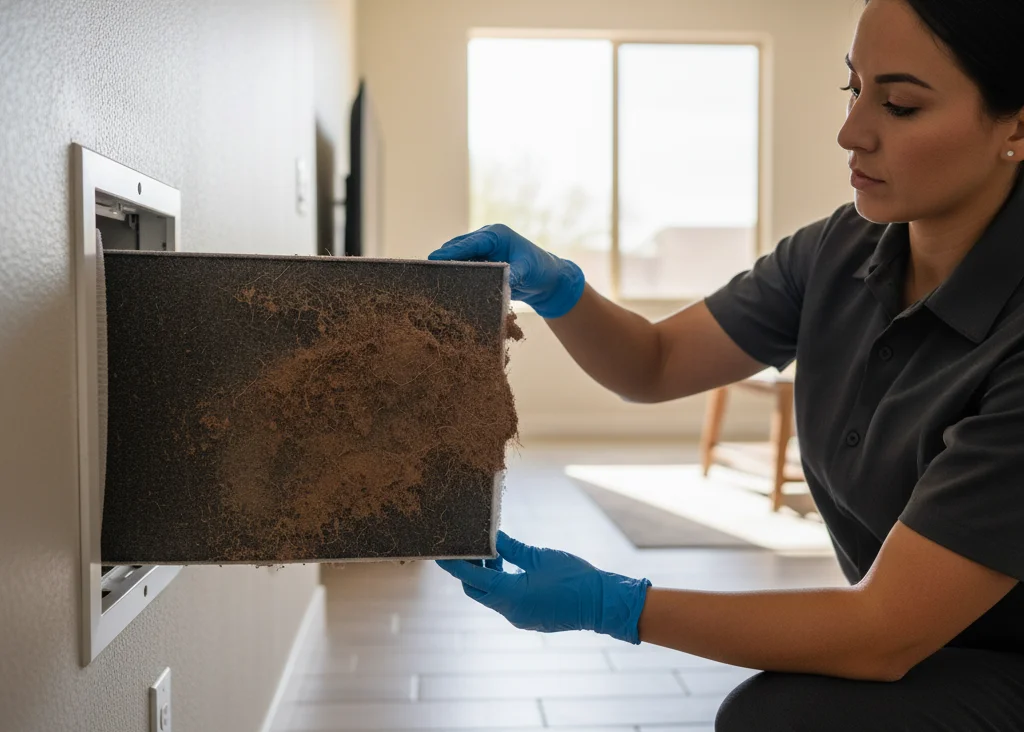
Pull the Air Filter and Look Through It
Hold the filter up to a light. If you can’t see light through it, your system is being starved of airflow — the #1 preventable cause of warm air and frozen coils here, where desert dust loads filters far faster than the “replace every 90 days” printed on the package. During June–September, check monthly. A new filter costs about $15 at any Bullhead City hardware store; run the system 30–60 minutes after swapping before judging the result. If filters keep clogging fast, a professional AC tune-up can find the dust intrusion point.
Check the Breaker Panel and the Outdoor Disconnect
Air conditioners have two power points that trip or get switched off: the breaker in your main panel (often labeled “AC” or “condenser”) and the outdoor disconnect box mounted on the wall near the unit. Reset a tripped breaker once. If it trips again, stop — a breaker that won’t hold is protecting you from an electrical fault, and resetting it repeatedly risks real damage. That’s the point to make the call.
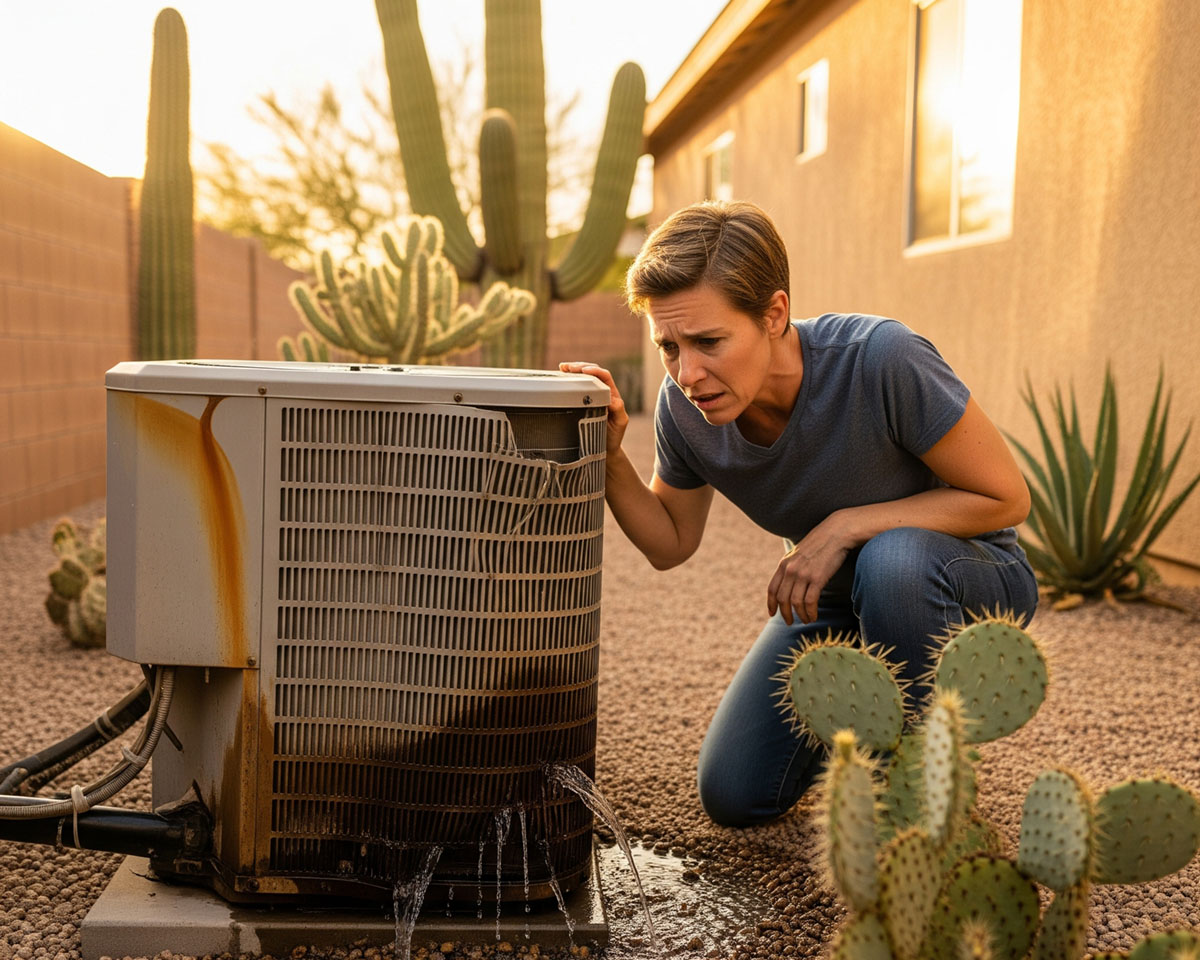
Look at the Outdoor Unit
Walk out to the condenser. Is the top fan spinning while the system calls for cooling? Are the coil fins matted with dust and debris — common after monsoon winds push dirt across the valley? Clear leaves and debris to keep two feet of breathing room around the unit. If you see ice on the copper refrigerant lines, shut the system off at the thermostat and let it thaw; running an iced-up system can destroy the compressor, the most expensive part in the machine.
Have These Answers Ready When You Call
If the five checks didn’t restore cooling, you’ll get a faster, more accurate repair visit by having five answers ready: what the system is doing (warm air, no air, short bursts), when it started, your unit’s brand and approximate age, what you’ve already checked, and whether anyone in the home is heat-sensitive — we prioritize households with elderly residents, infants, and pets when it’s 110°F+ outside. This is exactly the information that lets a dispatcher route the right technician with the right parts the first time.

When to Stop Troubleshooting and Shut the System Off
Troubleshooting has a hard stop. Shut the system down — at the thermostat and the breaker — and call a professional immediately if you notice any of these:
A burning or electrical smell. Wiring and motor insulation faults don’t fix themselves, and they are fire risks.
A breaker that re-trips. That’s a fault, not a nuisance.
Screeching, grinding, or repeated clicking. Failing motor bearings and contactors get more expensive the longer they run.
Ice anywhere on the system. Thaw first; running iced equipment kills compressors.
While you wait for service on a 110°F day: close the blinds on west-facing windows, run ceiling fans, keep exterior doors shut, and check on anyone heat-sensitive. The U.S. Department of Energy’s air conditioner maintenance guidance is also worth a read once you’re cool again — most of what breaks in desert summers is preventable in spring.
Still No Cold Air? Call Your Local Mohave Valley Team
If the checklist didn’t bring the cold air back, we will. Horizon Air, LLC is a local, family-owned team (AZ ROC #344248) serving Mohave Valley, Fort Mohave, and Bullhead City with honest diagnosis and clear, upfront pricing before any work begins — tell us what you found in the five checks and we’ll take it from there. See our AC repair service for Fort Mohave and Mohave Valley, or call (928) 768-3761 for same-day help.
Need Help With This Today?
Use the quick actions below to get answers, book the right service, or talk directly with Horizon Air before the issue gets more expensive.
Horizon Air, LLC