How Mohave Valley Homeowners Can Cut AC Run Time and Improve Energy Efficiency

June 15, 2026 Horizon Air, LLC
Inside this guide

Improving home energy efficiency in Mohave Valley should start with the parts of the home that make the air conditioner run longer than it should: dirty filters, leaky ducts, weak insulation, poor airflow, aging equipment, and thermostat habits that do not match desert heat.

Improving home energy efficiency in Mohave Valley should start with the parts of the home that make the air conditioner run longer than it should: dirty filters, leaky ducts, weak insulation, poor airflow, aging equipment, and thermostat habits that do not match desert heat. In Mohave Valley, Bullhead City, and Fort Mohave, those small losses matter because cooling is not a short summer event. It is a long season of repeated run time.

This guide gives homeowners a practical way to decide what to check first, when to schedule service, and how to think about cost without pretending every home has the same answer.
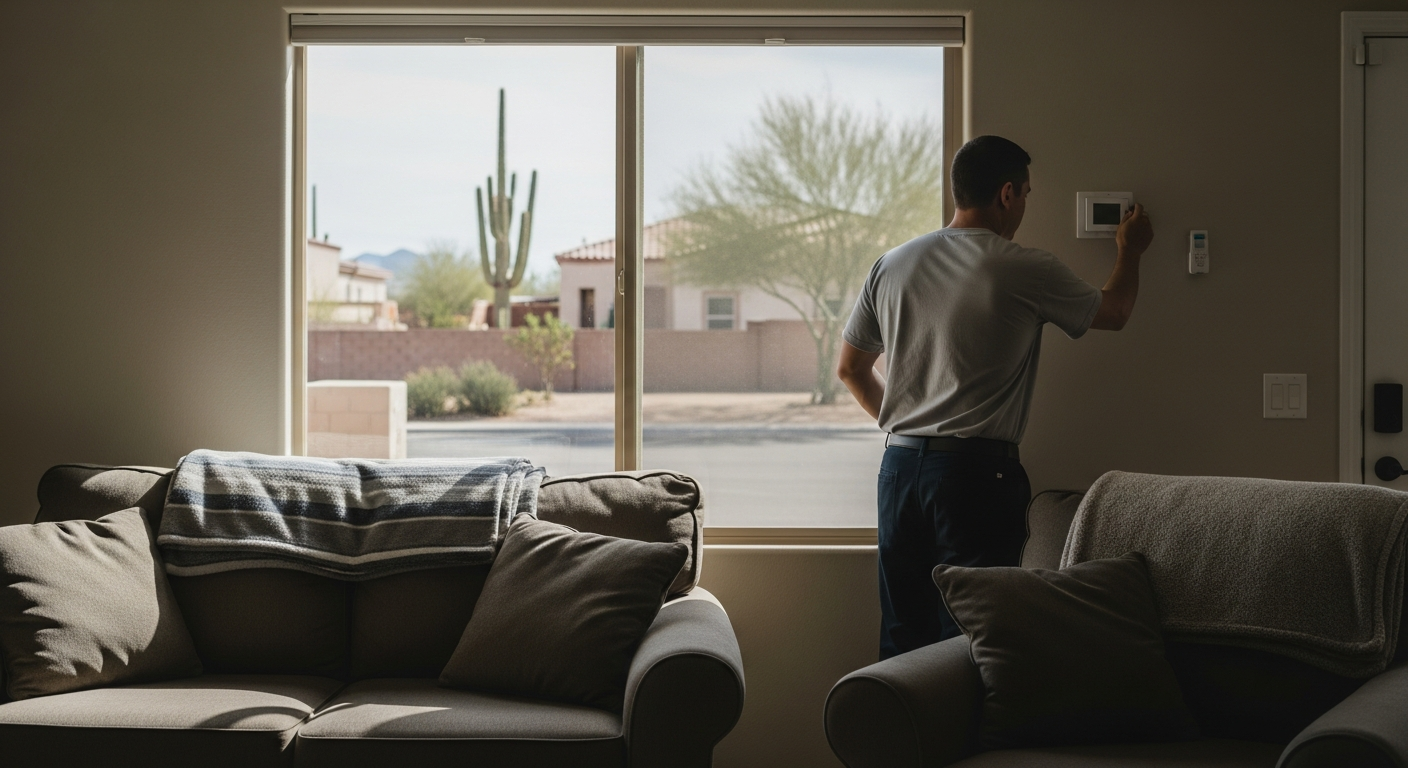
Mohave Valley thermostat set for summer energy efficiency

Most Mohave Valley Energy Problems Start With AC Run Time

The first question is not “what should I buy?” The better question is “why is the system running so long?”

ENERGY STAR heating and cooling guidance says nearly half of the energy used in a typical home goes to heating and cooling, so HVAC decisions can have a real effect on both comfort and utility bills. In Mohave Valley, that matters even more because a cooling system may run hard through spring, summer, and early fall.

Long run time usually comes from one or more of these conditions:

  • restricted airflow from a dirty filter, blocked return, or undersized duct path
  • leaky ducts in the attic, garage, or other hot spaces
  • weak attic insulation or air leakage around ceiling penetrations
  • an outdoor condenser that is dirty, shaded poorly, or struggling mechanically
  • thermostat settings that cause short cycling or unnecessary daytime run time
  • old equipment that can no longer keep up efficiently

If your electric bill climbs but your comfort does not improve, treat that as a diagnostic clue. The goal is not to sell the biggest upgrade first. The goal is to find the cheapest correction that produces a measurable comfort or run-time improvement.

In Mohave Valley homes, Horizon Air technicians often find that high bills come from a combination of dirty coils, restricted return airflow, and attic duct loss, not one single problem.

Why Desert Homes Need a Different Energy Efficiency Plan

Mohave Valley homes are exposed to heat patterns that punish weak spots. Attics get hot. Duct runs often pass through spaces that are much hotter than the rooms they serve. Dust builds up quickly. Monsoon humidity can make comfort feel worse even when the thermostat number looks normal.

That is why a local energy efficiency plan should look at the whole cooling path:

  1. Air enters the return.
  2. The system cools and dehumidifies it as much as conditions allow.
  3. Ducts carry that air across the house.
  4. Insulation and air sealing help keep that cooled air from being wasted.
  5. The thermostat tells the system when to start and stop.

When one part is weak, the rest of the system works harder. A new unit will not feel like a premium upgrade if attic leakage, return restrictions, or duct losses are still forcing it to fight the house.

For homeowners comparing options, start with Horizon Air’s cooling services and AC maintenance and tune-ups before assuming replacement is the only answer.

The Five Checks That Tell You What to Fix First

Use these checks before spending money on major energy-efficiency upgrades in Mohave Valley.

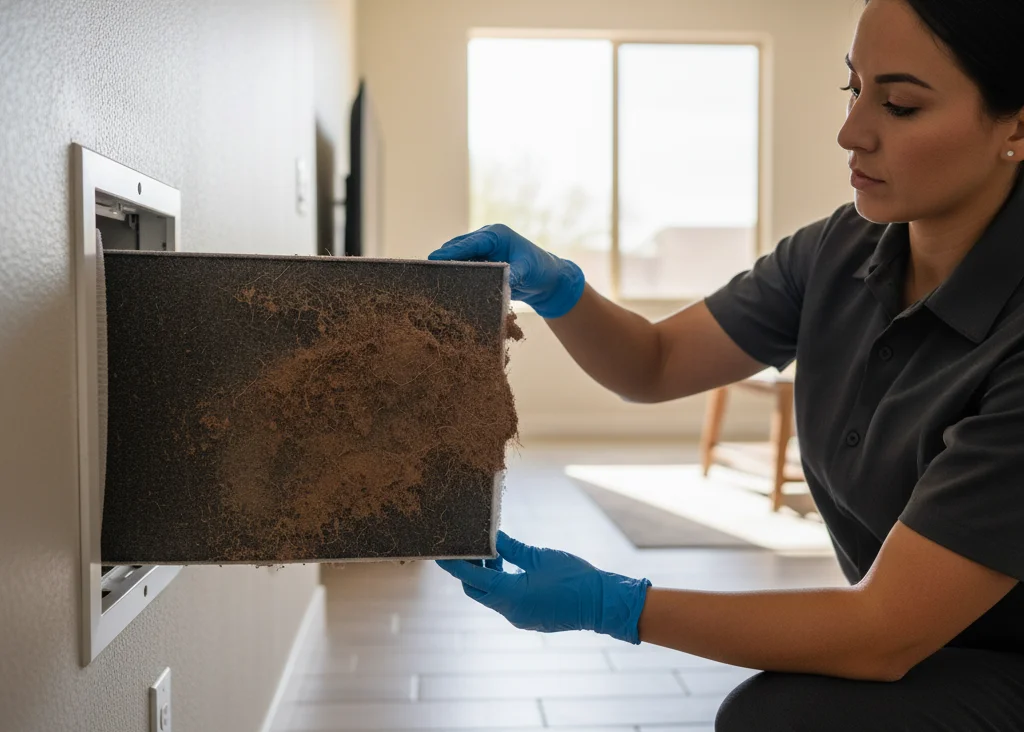
1. Check the filter and return airflow. ENERGY STAR recommends checking filters monthly during heavy-use seasons and changing them at least every three months. In a dusty desert home, “heavy use” can describe much of the cooling season. If the filter is loaded, airflow drops and the system works harder.

2. Compare room temperatures. A back bedroom that stays warm while the main living area is comfortable can point to duct balance, supply leakage, poor insulation, or sun exposure. Write down which rooms are uncomfortable and what time of day the problem happens.

3. Look for duct and attic warning signs. ENERGY STAR notes that sealing and insulating ducts can improve heating and cooling efficiency by as much as 20 percent in some homes. If ducts run through an attic or garage, duct leakage can waste cooled air before it reaches the room.

4. Watch how long the system runs. A system that runs constantly may be undersized, dirty, leaking air, low on refrigerant, or simply fighting a hot building envelope. A system that starts and stops rapidly may have a separate control, sizing, or airflow problem.

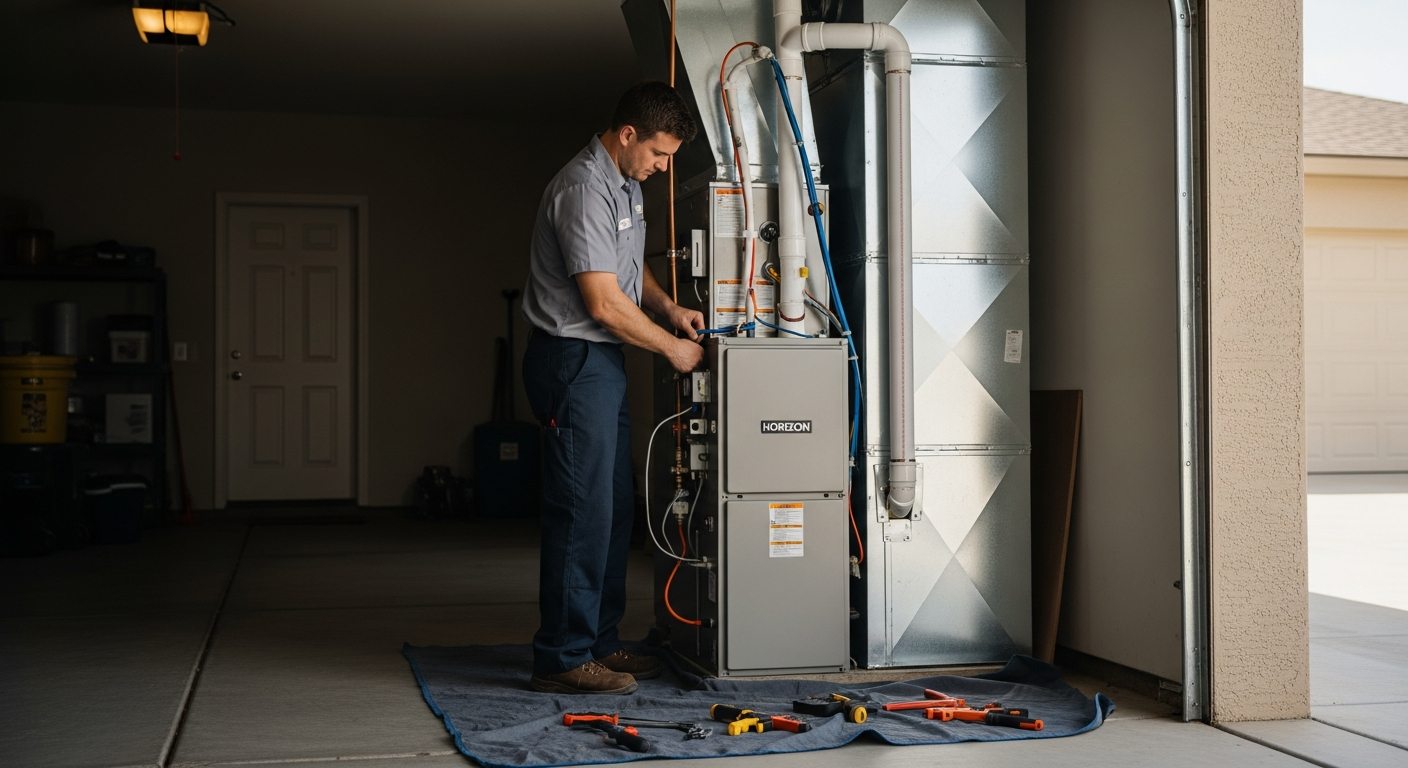
5. Review the age and maintenance history. If the system has not had recent service, schedule maintenance before judging whether the equipment is failing. If the system is older and repairs are becoming frequent, it may be time to compare repair cost against replacement value.

For duct-related comfort problems, see Horizon Air’s guide to duct sealing in Arizona and the older county-focused duct article on professional duct sealing.

What a Professional Energy Efficiency Inspection Should Cover

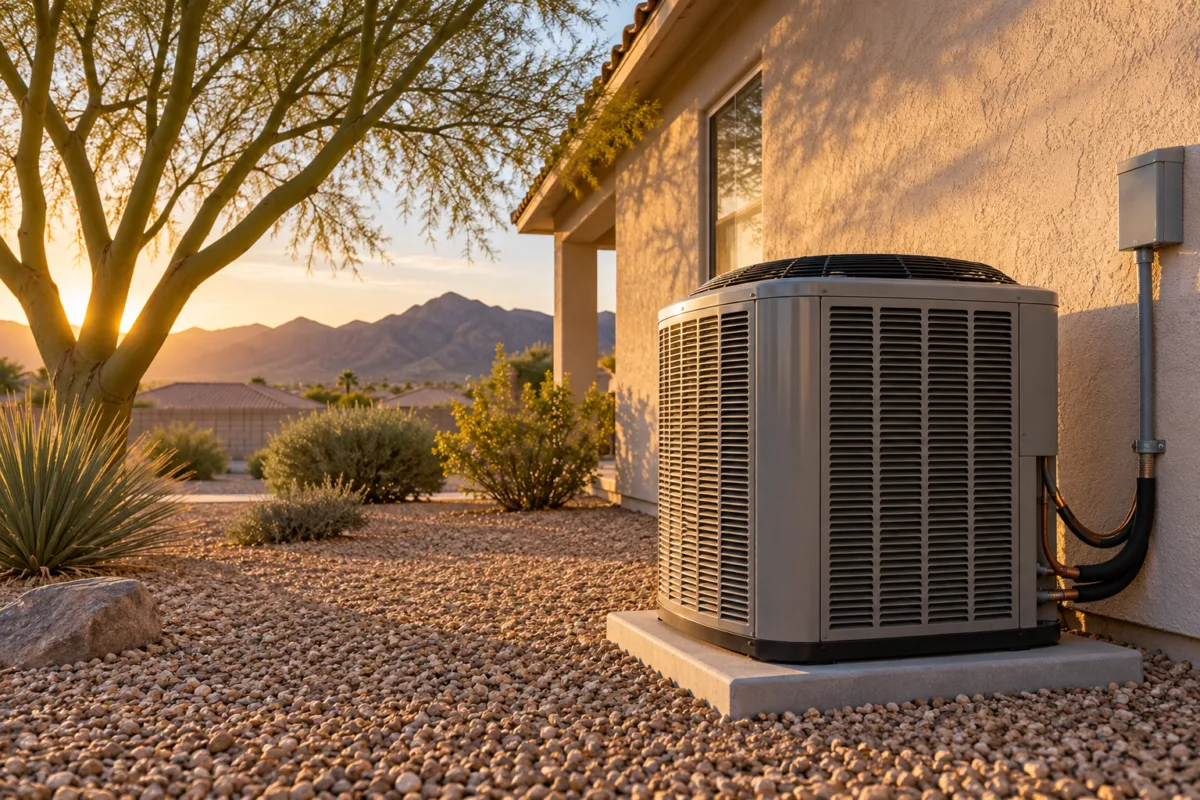
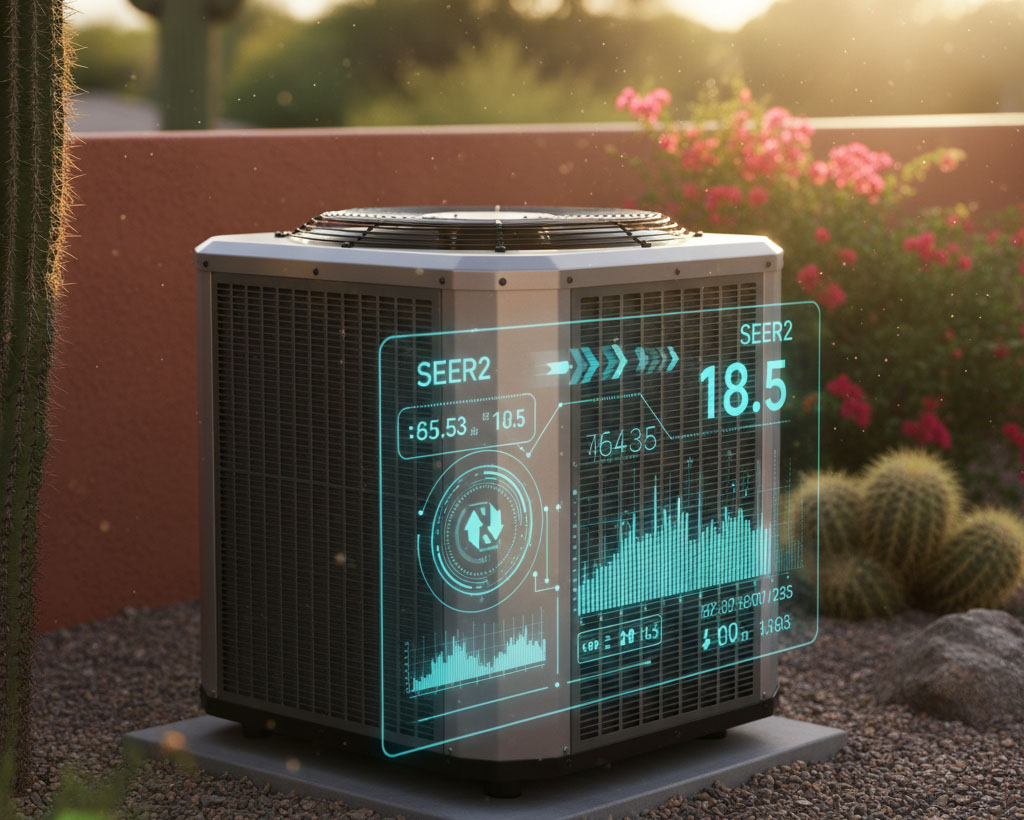
A modern outdoor air conditioning unit sits on gravel with digital graphics displaying energy efficiency data and performance metrics, surrounded by desert plants.

A useful inspection should produce a priority list, not a vague recommendation.

For a Mohave Valley home, that inspection should usually include:

  • filter, blower, coil, and outdoor condenser condition
  • supply and return airflow observations
  • thermostat operation and schedule review
  • visible duct condition, especially in hot spaces
  • attic insulation and air-leak clues where accessible
  • signs of short cycling, long run time, or uneven delivery
  • repair-versus-replacement discussion when equipment age justifies it

The U.S. Department of Energy air sealing guide explains that air sealing can reduce uncontrolled air leakage and improve comfort, but also notes that air sealing does not replace the need for proper insulation. That is an important distinction. A good recommendation should not treat one product as a magic fix for every home.

If the inspection points toward equipment replacement, ask whether duct correction, return improvements, or thermostat changes should happen before or during installation. ENERGY STAR warns that improper installation can reduce system efficiency, which means installation quality matters as much as the equipment label.
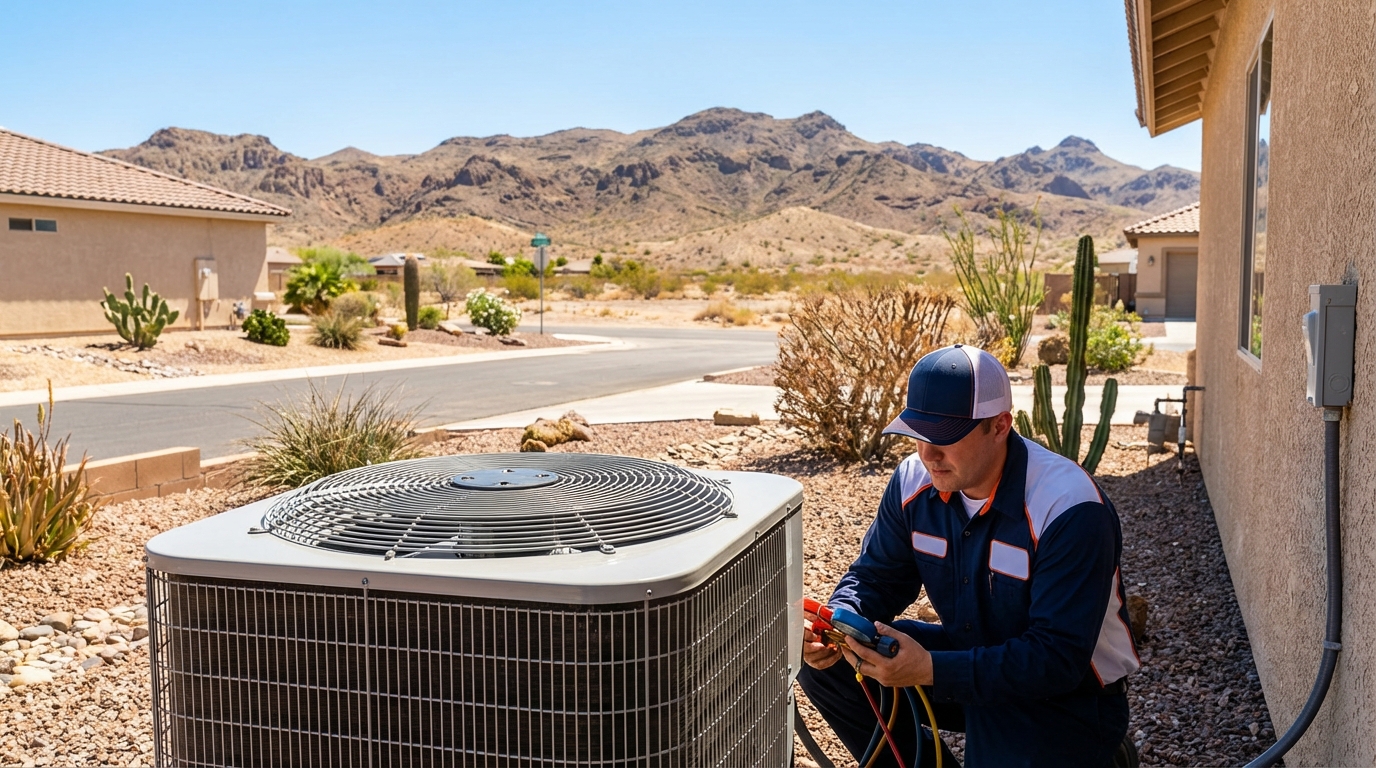
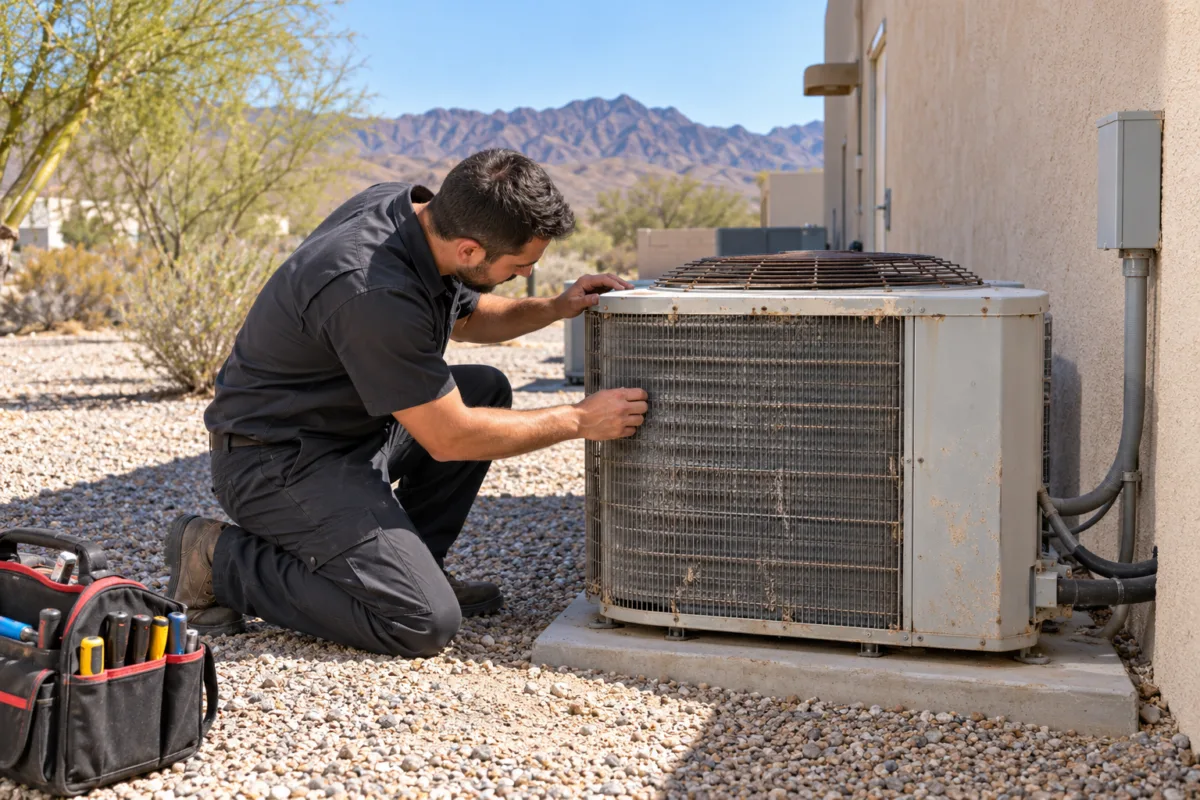
Mohave Valley HVAC technician checking outdoor unit

Questions About Energy Efficiency Mohave Valley?

Horizon Air starts with testing, not assumptions. We measure the system first and explain exactly what the data shows before recommending any work.

Cost, Savings, and Payback: What Homeowners Should Budget

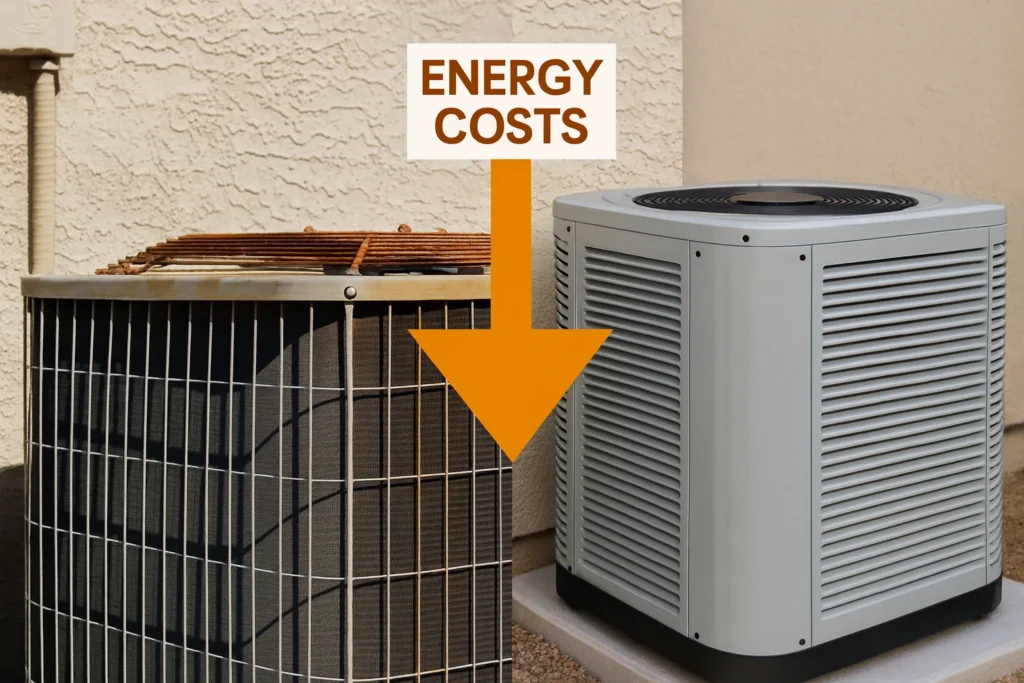
Two air conditioning units side by side, with an arrow pointing from the older unit to the newer one and “ENERGY COSTS” above the arrow, highlighting potential savings with AC replacement in Bullhead City.

Energy efficiency costs fall into tiers. The right tier depends on what the inspection finds. Maintenance and diagnostics are usually the lowest-cost starting point; duct, thermostat, airflow, and insulation corrections vary by access and scope; full replacement requires a written estimate. Horizon Air does not publish fixed prices in this guide because attic access, duct condition, system age, equipment size, and electrical requirements can change the scope quickly. The most honest starting point is a written recommendation that separates quick maintenance corrections from larger comfort upgrades.

Low-cost corrections include filter changes, thermostat schedule changes, clearing blocked registers, and basic maintenance. These are often the first move because they are fast and can reveal whether the problem was neglect, airflow, or system condition.

Mid-range corrections can include duct sealing, added attic insulation, return-air improvements, thermostat replacement, or targeted repairs. These are worth discussing when rooms are uneven, the system runs too long, or the home has obvious attic or duct losses.

Major upgrades include equipment replacement, larger duct corrections, or combined envelope and HVAC improvements. These need a written quote because home size, access, duct condition, equipment match, and electrical requirements all change the price.

What Changes the Final Estimate

Avoid any article or contractor that gives a confident one-size-fits-all price without seeing the home. For a quality decision, ask for:

  • the problem being solved
  • the recommended correction
  • whether the correction affects comfort, energy use, reliability, or all three
  • what must be verified before work starts
  • whether utility or manufacturer incentives may apply

Local incentive programs change. Mohave Electric Cooperative lists rebates for members, including heat pump, air conditioning, and ductless mini-split categories. UniSource says residential customers may have rebates for AC tune-ups, duct sealing, and new heating and cooling systems. Federal tax credit rules also changed after 2025, so homeowners should confirm current eligibility through the IRS home energy tax credits page or a tax professional before counting a credit in the budget.

Best Time to Schedule Energy Efficiency Work in Mohave Valley

The best time to schedule energy efficiency work is before the hottest stretch of the year, not after the system is already failing.

When Energy Efficiency Means Repair, Not Replacement

Not every high bill means you need a new system. Sometimes the better move is a smaller correction.

Repair or maintenance may be the right first step when:

  • the system is relatively new
  • the issue started after a missed maintenance cycle
  • airflow is weak but the equipment is otherwise operating
  • only one or two rooms are uncomfortable
  • the thermostat schedule is causing unnecessary run time
  • the outdoor unit is dirty or blocked

Replacement becomes more reasonable when:

  • the system is older and repairs are frequent
  • comfort problems continue after maintenance and duct checks
  • the unit cannot hold temperature during normal summer conditions
  • major components are failing
  • the home needs a broader comfort plan and the current unit is the weak link

This is where a local technician matters. A Mohave Valley home with leaky ducts and poor return airflow may need a different plan than a newer home with a correctly sized system that simply needs maintenance.

Horizon Air, LLC

Protected by CleanTalk Anti-Spam