A new air conditioner can lower your energy bills, but the saving depends on size, efficiency rating and ducts. ENERGY STAR says to consider replacing a unit more than 10 years old.
Age is the first thing to check, and the next section explains why. A new unit of the right size, with sound ducts, can cool the same house on less power.
The saving is not the same for every home. Size, efficiency rating and duct condition all change the result. This guide shows what drives the cost and how to plan a replacement in Bullhead City, Fort Mohave, Mohave Valley and Golden Valley.
Why an Old Air Conditioner Raises Your Bill
An air conditioner loses efficiency as it ages. It runs longer to hold the same temperature, and longer running means a bigger bill. Homes in our towns lean on air conditioning through long, hot summers, so that extra running time adds up.
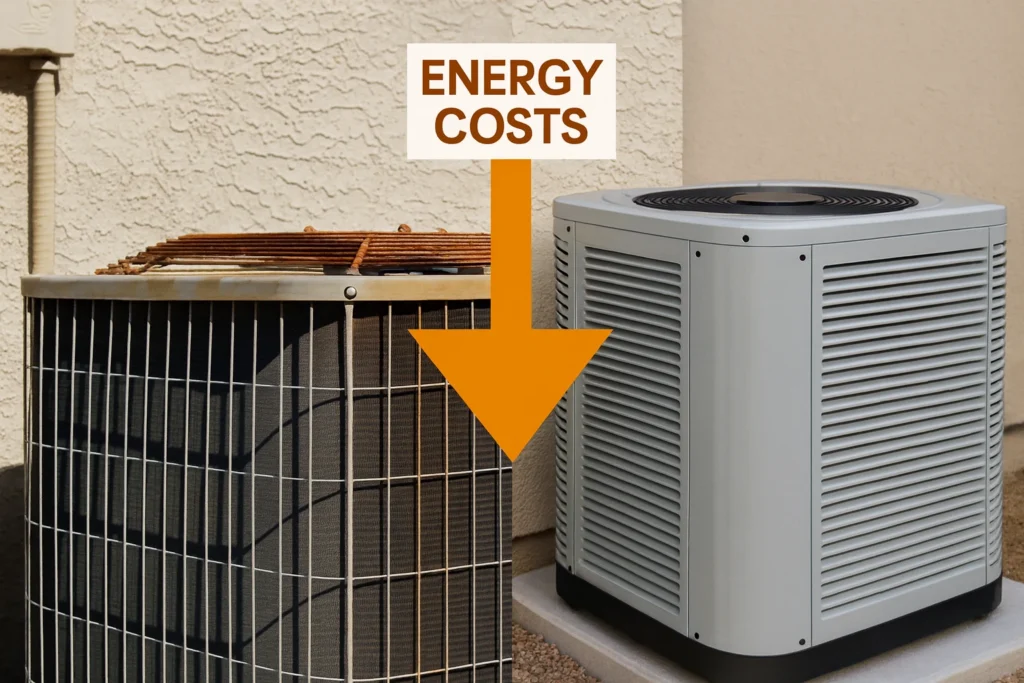
The U.S. government’s ENERGY STAR program says on its ENERGY STAR replacement page, “Installed correctly, these high-efficiency units can save up to 20 percent on heating and cooling costs.”
That 20 percent is a U.S. “up to” figure for heating and cooling together. The page gives no baseline. Read it as a best case, not a promise from Horizon.
A new unit also has to meet a federal floor. SEER2 is a seasonal cooling-efficiency score; a higher number means more cooling per unit of electricity.
Under the federal rule, new split-system air conditioners in the Southwest, which includes Arizona, must reach 14.3 SEER2 below 45,000 Btu/hr. Units of 45,000 Btu/hr or more must reach 13.8 SEER2. Btu/hr is the unit that measures cooling size. Ask each quote to show the SEER2 rating.
ENERGY STAR’s ask-the-experts page adds that “Older ACs, especially systems over 10-12 years old,” are more prone to breakdowns and performance issues.
What Sets the Price of a New System
Replacement cost depends on the work your house needs. Published market ranges give a rough picture. According to PickHVAC (May 22, 2026), buyers replacing a central air conditioner “typically pay between $3,500 and $9,500.” That is PickHVAC’s headline range, a U.S. market range, not a Horizon price. The same page gives $3,000 to $8,500 for a 2 to 3 ton system in a 1,200 to 2,000 square foot home, with no major ductwork.
Four things move the number:
- Size. Cooling capacity, measured in tons, has to suit the house.
- Efficiency rating. A higher SEER2 rating costs more up front.
- Ducts. Leaky or worn ducts may need repair or replacement.
- Installation details. A long run between the indoor and outdoor parts adds work.

PickHVAC lists three extras that can raise a price. The chart shows its ranges.
U.S. market range, not a Horizon price.
A higher-rated unit pays off only if its extra price is small. In its hot-dry example, the U.S. Department of Energy’s buying guide compares two 36,000 Btu/h models. One is ENERGY STAR at 15.2 SEER2; the other is less efficient at 13.4 SEER2. The ENERGY STAR model “saves money if priced no more than $869 (in 2023 dollars) above the less efficient model.” The guide assumes a 25-year life and power at 11 cents per kWh, the average price at U.S. federal facilities as of July 2024. Your own rate will differ.
Right Size and Sealed Ducts Protect Your Savings
A bigger unit is not a better unit. The same federal buying guide lists three installation problems that cause “efficiency losses”: oversizing, improper charging and leaky ducts.
In plain words, a unit that is too large, a wrong refrigerant charge or leaking ducts can cancel the gain from a new model. The new system should be matched to your house, and the ducts checked in the same project.
How was the size chosen? What is the efficiency rating? Are the ducts part of the job?
Planning Your Replacement in Bullhead City
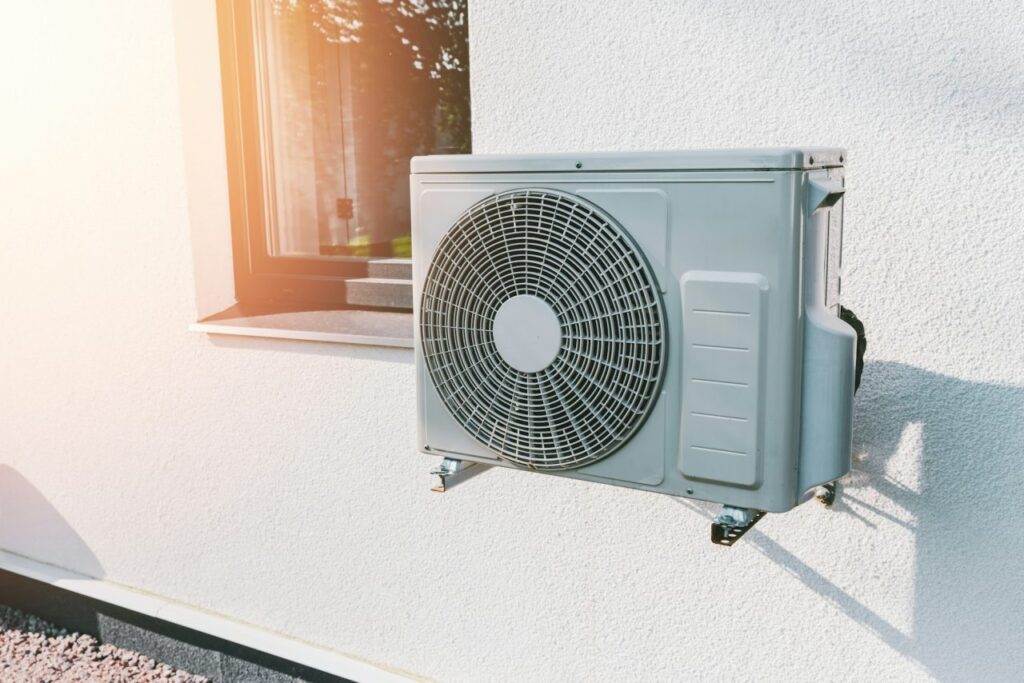
Plan before the unit fails. A planned replacement leaves time to compare options. A breakdown in the middle of summer leaves little room to compare. Cooler months are a good time to plan, because your old unit is not running flat out.
Gather these facts before you call a contractor:
- The age of your outdoor unit, printed on its label.
- Your highest summer bill from last year.
- Repairs you paid for in the past two years.
- Rooms that never cool down.
If your unit is past ENERGY STAR’s 10-year mark and repair bills keep coming, price a replacement before another big repair.
Horizon Air LLC serves Fort Mohave, Bullhead City, Mohave Valley and Golden Valley. Our AC installation and replacement page explains the service.
Not sure replacement is the right move? Read our guide on when to repair, replace or wait. For more on cost, see AC replacement costs in Mohave County.
Getting the Efficiency You Pay For

A high rating does not help if the installation is poor. The U.S. Department of Energy’s central air conditioner guide says, “Installation problems like oversizing, improper charging, and leaky ducts result in efficiency losses.”
Ask the contractor how they will check the unit’s size, its refrigerant charge and your ducts. Our AC maintenance and tune-ups page covers servicing after installation.
Frequently Asked Questions
Quick answers to questions homeowners ask before replacing an air conditioner.
Will a new air conditioner lower my energy bill?
It can. ENERGY STAR says to consider replacing a unit more than 10 years old. It says high-efficiency units installed correctly can save up to 20 percent on heating and cooling costs. That is a U.S. best-case figure for heating and cooling together, with no baseline given. Your result depends on the new unit’s size, your ducts and how you use it.
How old is too old for a central air conditioner?
ENERGY STAR’s rule is more than 10 years. Its ask-the-experts page adds that older systems are more prone to breakdowns and performance issues. Age alone does not decide it. Your repair history and your bills matter too.
Does a bigger air conditioner cool better?
No. The U.S. Department of Energy’s federal buying guide lists oversizing among the installation problems that cause efficiency losses. The unit should match your house.
Is a higher efficiency rating worth the extra cost?
It can be, up to a point. The extra price has to be earned back through lower bills. That depends on your electric rates and how long the unit runs. Compare the price gap between ratings with the savings you can expect.
Contact Horizon Air LLC
Horizon Air LLC is Licensed, Bonded & Insured, ROC #344248. Planning an air conditioner replacement in Bullhead City, Fort Mohave, Mohave Valley or Golden Valley? To reach Horizon Air, call (928) 768-3761 or use the contact page.
Horizon Air LLC