If you run a shop, office or restaurant in Bullhead City, an AC failure on a hot day costs you customers. Here is a short checklist, a maintenance schedule built around your opening hours, and what a tune-up is worth.
Start with what you or your staff can do: check the thermostat, the air filters, the circuit breaker and the space around each outdoor unit. Then book a professional AC tune-up in the spring (March to April), before the hottest weather. Book a heating check in October.
Neglected equipment struggles to perform efficiently and is more likely to fail when you need it most. Pick quiet hours for each visit so you do not lose trade.

Why HVAC Maintenance Matters for a Bullhead City Business
A failed air conditioner costs a business more than a repair bill. Customers leave, staff slow down, and the doors may have to close for the day. Regular maintenance helps avoid that.
According to ENERGY STAR, the average commercial building in the U.S. wastes 30% of the energy it consumes. Its low-cost measures include making sure HVAC equipment is clean and running properly.
ENERGY STAR’s small-business tips for convenience stores say to tune up your heating and cooling equipment yearly. That is national guidance, not a Horizon Air rule.
Consider one common failure: a bad capacitor, the small part that helps your AC start. A technician can test the capacitor’s strength and replace it before it fails.
This single, preventable issue shows why consistent summer maintenance matters. A sudden breakdown in July can close the doors for the day. It also helps to read up on preparing for a summer breakdown.
What Your Staff Can Check Before You Call
Before you schedule a service call, a quick walk-through can sometimes solve the problem. It also gives the technician useful details.
- Check your thermostat settings. Make sure it is set to “Cool” and the temperature is lower than the current room temperature. If more than one thermostat controls your space, check each one.
-
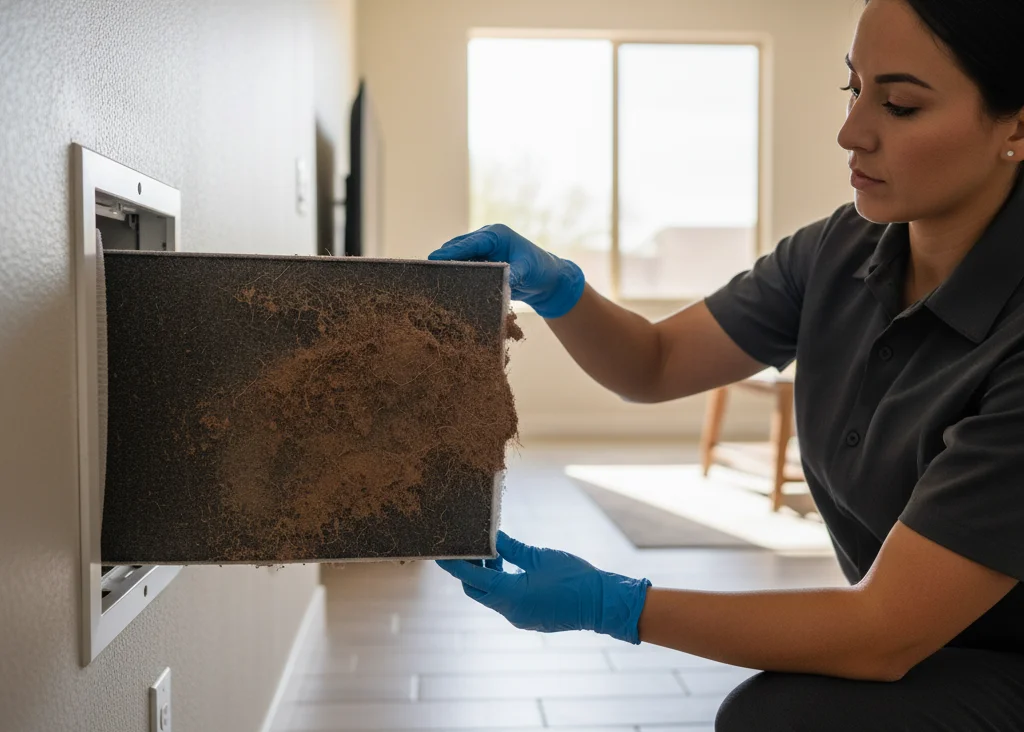
Inspect your air filter.
A filter clogged with desert dust is a primary cause of reduced airflow and system strain.
If it looks dirty, replace it.
ENERGY STAR’s small-business tips say to check the filter “every month, especially during heavy use months,” and to change it at least every three months.
-
Check the circuit breaker.
Find your electrical panel and check if the breaker for your air conditioner has tripped.
A power surge can cause this.
If it trips again immediately after being reset, leave it off and call for service.
-
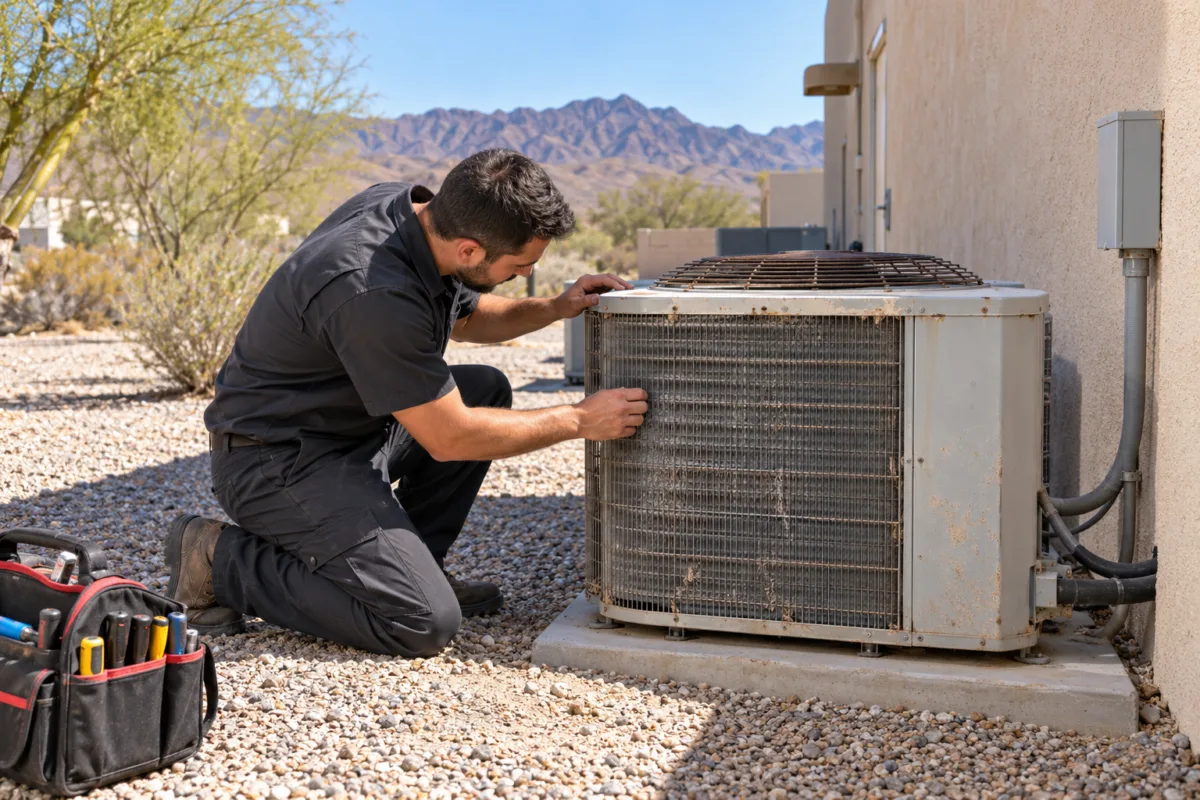
Clear the area around your outdoor unit.
Remove any weeds, dust buildup, or debris blocking airflow.
Keeping this area clear is a basic part of summer maintenance.
-
Ensure all air vents are open and unblocked.
Walk through your space and confirm that the vents are open and not covered by shelving, stock, furniture, or curtains.
Blocked vents disrupt the system’s balance and prevent even cooling.
-
Listen for unusual noises.
When the unit tries to run, pay attention to any grinding, squealing, or loud banging sounds.
Write down what you hear and when. Telling the technician the specific noise can help pinpoint the problem.
What a Professional Tune-Up Typically Covers

Changing your air filter is a good start, but a professional inspection goes deeper. A good tune-up typically covers the steps below. Ask any contractor what their visit includes before you book.
- Inspect and Tighten Electrical Connections. Loose connections can cause failures and wear out parts.
- Clean the Outdoor and Indoor Coils (Condenser and Evaporator). Desert dust on the coils holds heat in and makes your AC work harder.
- Clear the Drain Line (the pipe that carries away moisture). A blockage here can cause water damage inside your building and shut down your AC.
- Test the Capacitors and Contactors (the parts that start your AC). These parts are prone to failure in extreme heat. Testing them helps avoid a sudden outage on a hot afternoon.
- Check Refrigerant Levels (the fluid that cools your air). Low levels mean weak cooling.
- Lubricate Motors and Bearings. Proper lubrication reduces friction and helps keep the blower and condenser motors from burning out under strain.
- Check That the Thermostat Reads Correctly. A thermostat that reads wrong can run the AC too much or too little.
- Inspect the Indoor Fan (Blower). The fan wheel and motor should be clean and balanced to keep airflow even throughout the space.
- Check System Controls and Safety Switches. This verifies that your unit starts, operates, and shuts down safely, protecting the equipment from damage.
- Inspect Ductwork for Leaks. Leaking ducts waste cooled air before it reaches the room.
- Evaluate Air Filters. A dirty filter blocks airflow, so the filter is checked and changed if needed.
If your building has more than one unit, ask whether a quote covers one unit or all of them.
According to This Old House’s 2026 cost guide, AC tune-ups typically cost $65 to $200 across the U.S. Central AC tune-ups run $85 to $200.
These are published national ranges, not Horizon Air prices. Your own equipment may differ, so ask for a written quote. Weigh the range against a day of lost trade: count hours closed and customers lost.
Market range, not a Horizon price.
A Maintenance Schedule Around Your Opening Hours
Timing matters in a desert climate, and so does your trading day. A restaurant may prefer the quiet hours between lunch and dinner. An office may prefer a day when few staff are in. Ask any contractor which times are possible.
March – April (Pre-Season AC Tune-Up):
Book the tune-up before the first very hot days.
A pre-season visit typically includes checking refrigerant levels, cleaning outdoor coils caked with winter dust, and testing electrical parts that fail under extreme heat.
June (Mid-Season Filter Check):
By June, your AC has been running hard for weeks.
Have staff look over each outdoor unit for debris and check the indoor air filters.
October (Post-Monsoon and Heating Check):
After monsoon storms, outdoor units can be coated in dust. An October visit cleans this away and prepares the system for the off-season.
It is also a good time for a heating check.
Winters are mild, but you still need reliable heat on chilly mornings and evenings.
Common HVAC Maintenance Mistakes Bullhead City Business Owners Make

One of the most common mistakes is a neglected outdoor unit (the condenser). In the desert, dust, cottonwood, and debris clog the delicate fins. That forces the system to work harder to release heat.
According to ENERGY STAR’s maintenance checklist, airflow problems can reduce a system’s efficiency by up to 15 percent. It advises checking air filters once a month. It also advises a contractor check before each season: cooling in the spring and heating in the fall. This is national guidance written for homes.
Maintaining one unit and skipping the others. One failed unit can leave part of your space too hot.
Another mistake is booking every unit for the same day in your busiest week. Spread the visits across quieter days so part of your space stays cool.
A third mistake is ignoring the drain line that carries away moisture. Algae and sludge can build up and block it. This can shut down your unit and cause water damage. If you notice any of these issues, schedule professional maintenance.
Frequently Asked Questions
Quick answers to the questions people ask before they call or book.
What should I budget for professional HVAC maintenance for my business?
According to This Old House, national AC tune-up costs run $65 to $200, and $85 to $200 for central AC. These are not Horizon Air prices. Your cost depends on your equipment, so get a written estimate before you agree to the work.
When is the best time of year to schedule HVAC maintenance in Bullhead City?
Schedule your air conditioning tune-up in the spring (March to April), before the extreme summer heat arrives. For your furnace or heat pump, schedule a heating check in October.
What credentials should I look for in an HVAC maintenance professional?
Always verify your technician works for a licensed, bonded, and insured company. Ask to see the contractor’s license number before you book.
What are the signs that my HVAC system is overdue for maintenance?
Higher-than-normal energy bills, weak airflow from vents, and strange noises like grinding or squealing are clear signs. If your AC runs constantly but cannot keep your space cool in summer heat, it is overdue for service. Musty odors or excessive dust also point to a need for a tune-up. In a business, customer complaints about the heat are another sign.
About Horizon Air
Horizon Air is family owned and has been in business since 1976. It serves offices, shops and eateries as well as homeowners in Fort Mohave, Bullhead City, Mohave Valley and Golden Valley. Its license is ROC #344248.
Contact Horizon Air LLC
Shop, office or restaurant owner? Call or send a message to book your maintenance visit.
Horizon Air LLC