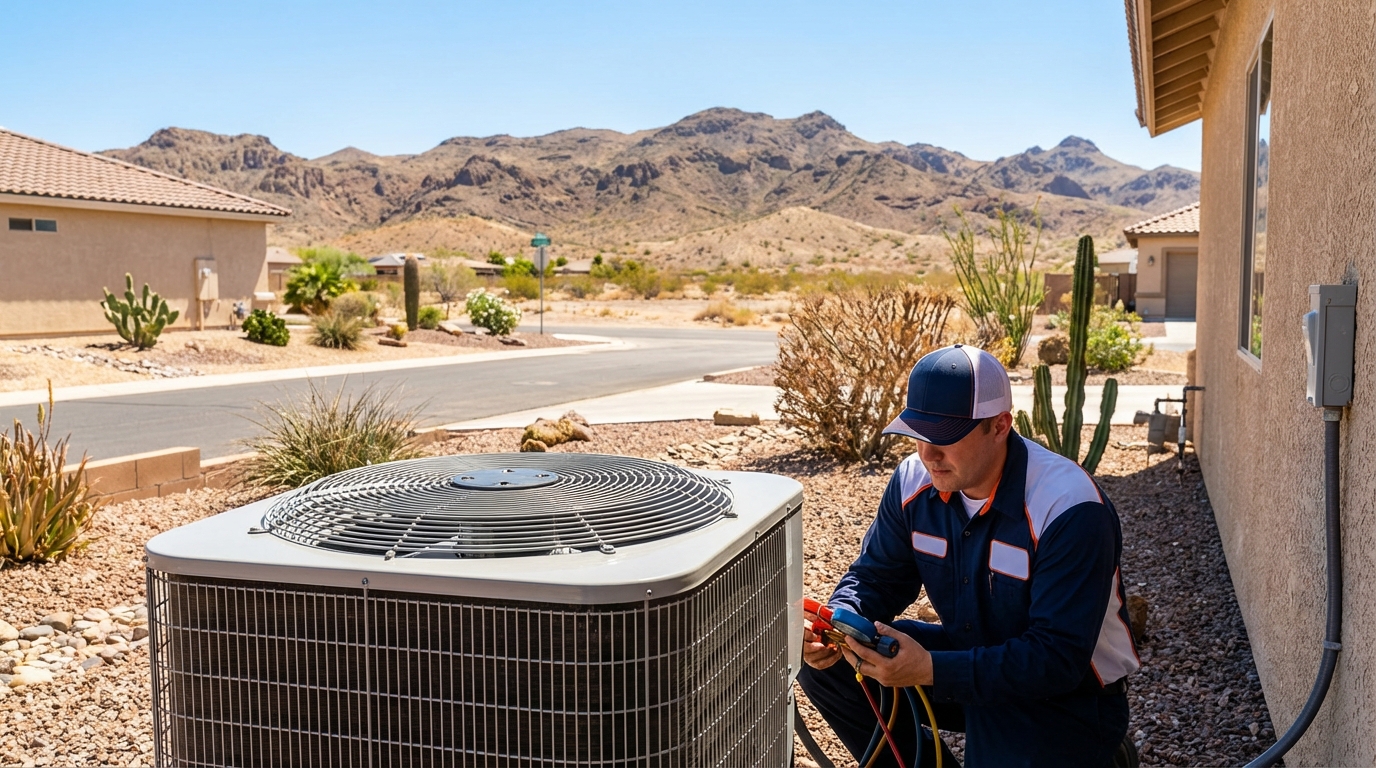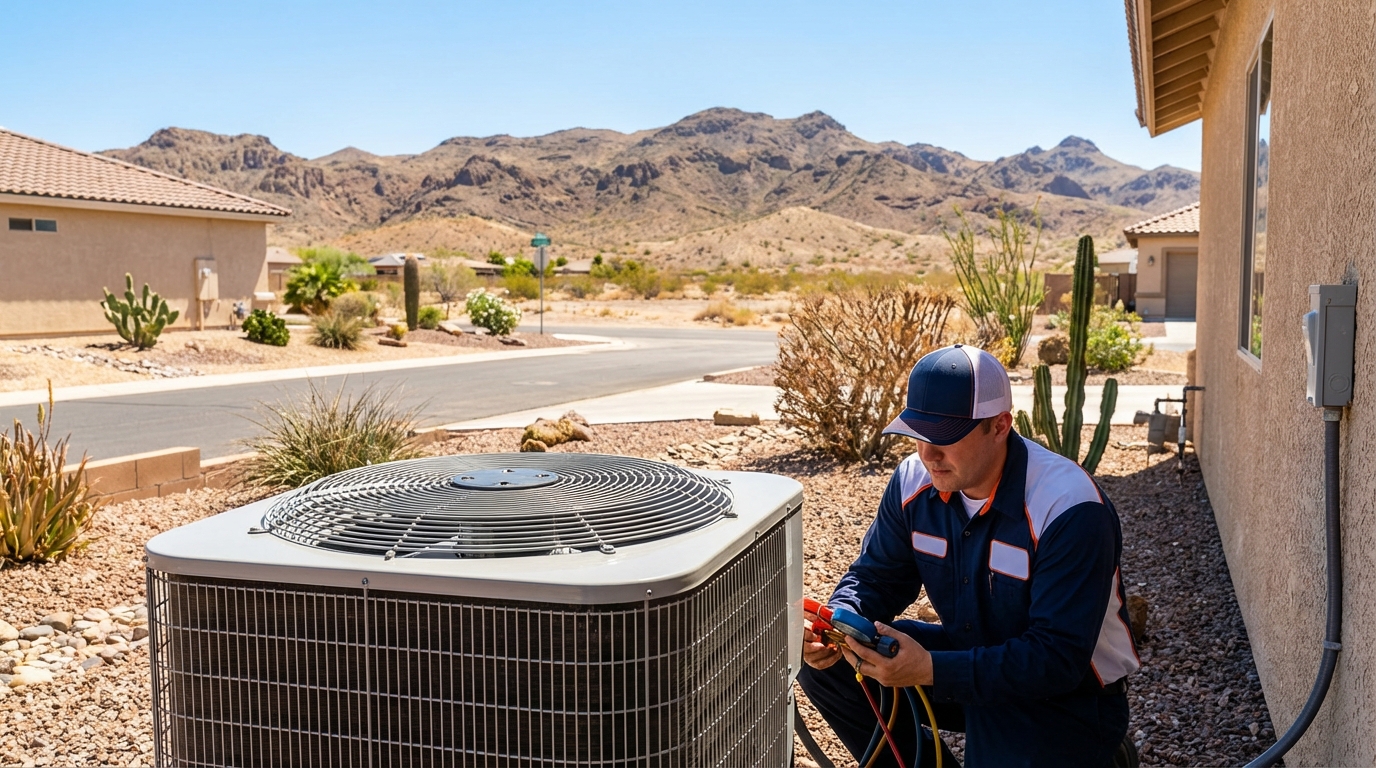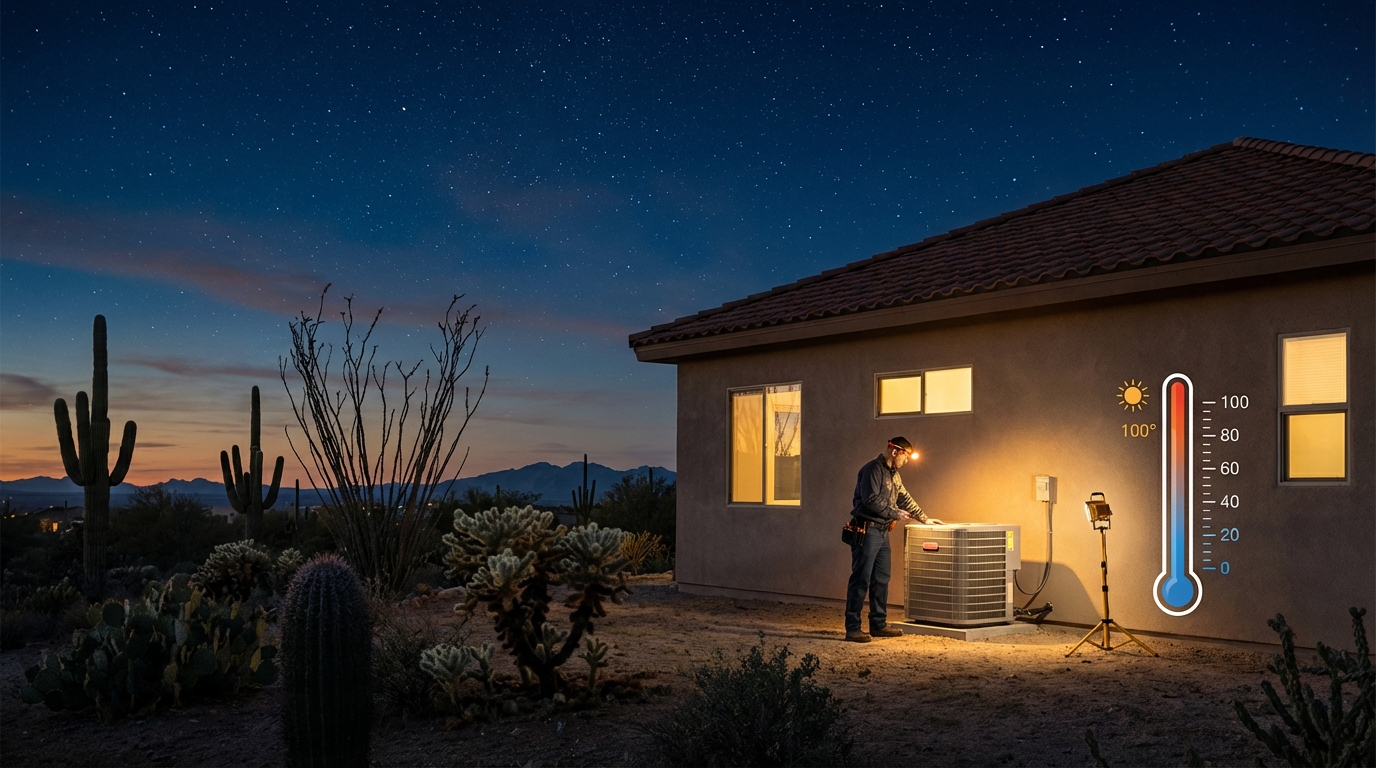
Living in Fort Mohave means navigating a climate of extremes. While our winters are mild compared to the Midwest, the daily temperature fluctuation presents a unique challenge for your HVAC system. It is not uncommon for daytime highs to reach the pleasant 60s, only for overnight lows to plummet into the 30s once the sun sets over the mountains.
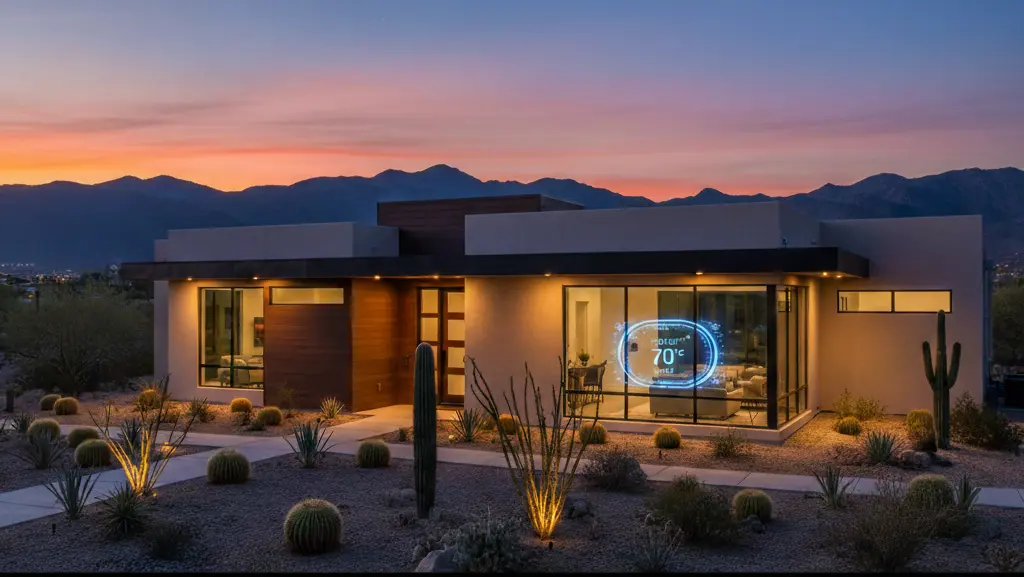
<figcaption style=”padding:1rem;background:#f8f9fa;font-size:0.9rem;color:#6c757d;text-align:center;”>Arizona desert nights can drop 30-40°F from daytime highs – is your HVAC ready?</figcaption>
</figure>
For homeowners in Mohave Valley, this 30-to-40-degree swing isn’t just a wardrobe issue—it creates significant mechanical stress on your home comfort systems. If you have been searching for “heating and AC repair” or noticing your utility bills creeping up, your system likely isn’t optimized for these rapid shifts. Here is how to maintain efficiency, prevent breakdowns, and know when it is time to call for professional service.
The Impact of Desert Temperature Swings on HVAC Hardware
In many parts of the country, a furnace turns on in November and runs steadily until March. In Arizona, your system often cycles between cooling (or idle) during the day and hard heating at night.
This rapid transition requires your heat pump or furnace to work harder during the specific window of 5:00 PM to 8:00 PM, when ambient temperatures drop sharpest. This “thermal shock” is the leading cause of capacitor failure and compressor strain during the winter months.
Why Systems Fail in January
Many residents ignore minor noises or airflow issues in December, only to face a total shutdown during the coldest week of January. The most common issues we see at Horizon Air during winter service calls include:
- Heat Pump Defrost Failures: When frost builds up on the outdoor coil and the system cannot melt it, efficiency drops to zero.
- Clogged Filters: The dry desert dust does not take a winter break. A dirty filter restricts airflow, causing the heat exchanger to overheat.
- Thermostat Miscalibration: Older sensors may not register the rapid evening drop quickly enough to keep the home comfortable.
Strategic Optimization: How to Prevent Heating Repair Calls
Preventative maintenance is cheaper than emergency repairs. By taking specific steps to optimize your airflow and thermostat settings, you can reduce the load on your unit.
1. The “Setback” Strategy for Heat Pumps
If you have a gas furnace, turning the temperature down significantly while you are away (setback) saves money. However, if you are among the majority of Fort Mohave residents using an electric heat pump, deep setbacks can actually backfire.
If you set your thermostat back more than 3-5 degrees, your heat pump may engage its “auxiliary” or “emergency” heat strips to recover that temperature quickly when you return. These heat strips consume roughly three times the electricity of the heat pump compressor.
The Fix: Keep your thermostat consistent. Allow it to drop no more than 2 or 3 degrees at night or when you are away to avoid triggering inefficient resistance heating.
2. Combatting the Dry Air
Humidity holds heat. In our arid climate, dry air makes 68°F feel like 64°F. This often leads homeowners to crank up the thermostat, putting more wear on the heating components.
Installing a whole-home humidifier or maintaining portable units can allow you to set your thermostat lower while maintaining the same level of perceived comfort. This reduces the runtime of your heater significantly over the season.
3. Airflow and Register Management
A common myth is that closing vents in unused rooms saves energy. In modern HVAC systems, this increases static pressure within the ductwork. This added pressure forces the blower motor to work harder and can lead to duct leakage or motor burnout.
The Fix: Keep at least 80% of your home’s vents open to ensure proper airflow balance.
Troubleshooting: When to Schedule Heating Repair
Even with optimal settings, mechanical parts wear out. Recognizing the early signs of failure can save you from a complete breakdown on a freezing night. If you notice any of the following, it is time to look into Heating Repair (Furnace/Heater).
Short Cycling
Does your heater turn on for three minutes, shut off, and then turn back on five minutes later? This is called short cycling. It often indicates an oversized unit, a blocked airflow sensor, or a failing thermostat. This puts immense wear on the starting components of your motor.
Cool Air from Vents
If your system is blowing lukewarm or cool air when set to heat:
- Check your thermostat: Ensure it is set to “Heat” and not “Fan On.”
- Check the outdoor unit: If it is encased in ice, the defrost cycle may be broken.
- Check the filter: A completely blocked filter can trigger a safety limit switch that shuts off the burners/elements while the fan keeps running.
If these checks don’t resolve the issue, you likely have a refrigerant leak or a sequencer failure requiring professional attention.
Unusual Odors
It is normal to smell a faint “burning dust” odor the first time you turn your heat on in the fall. However, if you smell burning plastic, electrical ozone, or rotten eggs (gas) mid-winter, shut the system off immediately and contact a professional.
Professional Maintenance Checklist
While DIY filter changes are essential, deep cleaning requires professional tools. To extend the life of your system, a seasonal tune-up should include:
- Amperage verification: Checking that motors are drawing the correct amount of electricity.
- Electrical connection tightening: Vibrations loosen wires over time, leading to arcing and failure.
- Coil cleaning: Even a thin layer of desert dust acts as an insulator, preventing the system from absorbing heat from the outside air.
Routine care is the most effective way to avoid the stress of an emergency “heating repair near me” search in the middle of the night. Learn more about our Heating Maintenance plans designed specifically for Mohave County homes.
Stay Warm in the Valley
Don’t let the desert winter catch you off guard. Whether you need a seasonal tune-up to optimize efficiency or an emergency repair to restore heat, Horizon Air LLC is Fort Mohave’s trusted partner. We understand the specific demands our local climate places on your equipment.
Is your system making strange noises or struggling to hold temperature tonight? Contact Us today for reliable, same-day service.